Grass walls aren’t just for Instagram-worthy cafes anymore. Homeowners are bringing the look into living rooms, home offices, and even bathrooms, and for good reason. They add texture, soften hard surfaces, improve air quality (if living), and create a focal point without the commitment of a full renovation. Whether you’re working with real turf or high-quality synthetic panels, grass wall decor bridges the gap between biophilic design and practical DIY installation. This guide walks through the options, project ideas, and maintenance realities so you can decide what works for your space and skill level.
Table of Contents
ToggleKey Takeaways
- Grass wall decor combines biophilic design with practical DIY installation, offering texture, sound absorption, and air quality benefits without major renovation costs.
- Living grass walls require structural reinforcement (locate studs, use furring strips for 10–15 pounds per square foot), weekly watering checks, and full-spectrum LED lighting, making them ideal for committed homeowners.
- Artificial grass wall panels are a low-maintenance alternative using UV-resistant polyethylene or polypropylene that mounts with adhesive backing, furring strips, or frame systems in just 2–4 hours.
- Beginner-friendly grass wall projects like framed accent panels and desktop backdrops cost under $150 and deliver immediate visual impact without plumbing or electrical work.
- Optimal placement for grass wall decor includes home offices (sound reduction for video calls), living rooms, entryways, and bathrooms with proper ventilation, while avoiding areas near heat sources or grease exposure like kitchens.
- Maintenance differs dramatically: living walls need bi-weekly watering and monthly pest monitoring, while synthetic panels require only monthly vacuuming and occasional spot cleaning with vinegar solution.
Why Grass Wall Decor Is Trending in Modern Homes
Biophilic design, integrating natural elements into built environments, has moved from concept to standard practice in residential interiors. Grass walls deliver that connection to nature without requiring a yard or garden space.
They’re especially popular in urban homes and condos where outdoor square footage is limited. A vertical grass installation can turn a bland wall into a living feature that absorbs sound, reduces visual clutter, and adds humidity to dry indoor air (when using real grass). Even artificial versions provide textural contrast that softens industrial finishes like concrete or metal.
Another driver: ease of installation. Unlike tile or wood paneling, most grass wall systems mount with adhesive backing, furring strips, or lightweight frames, no special permits or structural reinforcement needed. This makes them accessible to intermediate DIYers who want impact without demolition.
Finally, they’re modular. You can start small with a 2×2-foot panel behind a desk and expand as confidence (and budget) allows. That flexibility appeals to renters and homeowners alike.
Living Grass Wall Installations for Indoor Spaces
A true living wall uses soil, irrigation, and grow lights to sustain real grass or moss. It’s the most authentic option but requires planning and ongoing care.
Choosing the Right Grass Species
Indoor living walls typically use fine fescue or Kentucky bluegrass cultivars bred for low light. Some systems incorporate moss (e.g., preserved or live sphagnum) for lower water needs. Avoid species that require full sun or deep root systems: shallow-rooting ornamentals work best.
Structural Considerations
Living walls add 10–15 pounds per square foot when saturated. Most interior walls can handle this, but if mounting to drywall alone, locate studs and use #10 wood screws with washers, or install a 1×3 furring strip framework anchored every 16 inches on center. For walls over 4×6 feet, consult a structural engineer, especially in older homes.
Irrigation and Drainage
You’ll need a drip irrigation system or self-watering reservoir. Kits from companies like Gardenista often include modular trays with built-in drainage channels. Route runoff to a catch basin or floor drain: uncontrolled moisture will damage drywall and framing. Expect to check water levels weekly and adjust based on humidity.
Lighting
Without south-facing windows, install full-spectrum LED grow lights (6500K color temperature, 2000–3000 lumens per panel). Mount them 12–18 inches from the grass surface on a timer (12–14 hours daily). Budget around $60–$120 for a quality fixture.
Bottom line: Living grass walls deliver the real deal but require commitment. If you’re not ready for weekly watering checks and occasional replanting, synthetic panels are a smarter start.
Artificial Grass Wall Panels: Low-Maintenance Green Solutions
Synthetic grass panels offer the look without irrigation, lighting, or permits. Quality varies widely, so know what to look for.
Material Quality
Look for UV-resistant polyethylene (PE) or polypropylene (PP) blades with a backing thickness of at least 3mm. Cheap panels use thin vinyl that flattens and yellows within months. Higher-end options mimic multiple grass species with varied blade heights (15–35mm) for realistic depth.
Mounting Methods
- Adhesive backing: Peel-and-stick panels work on smooth drywall or plywood. Clean the surface with TSP (trisodium phosphate) first: dust kills adhesion. Press firmly and let cure 24 hours before handling.
- Furring strips: For textured or uneven walls, screw 1×2 furring strips horizontally every 24 inches, then attach panels with a staple gun or construction adhesive (e.g., Liquid Nails Heavy Duty). This method also creates an air gap that prevents moisture buildup.
- Frame systems: Pre-built frames (often aluminum or wood) let you swap panels seasonally or relocate the installation without wall damage. Ideal for renters.
Panel Sizing and Seams
Standard panels come in 12×12-inch, 20×20-inch, or 39×39-inch squares. Plan your layout to minimize visible seams, stagger rows like brick, and trim edges with a utility knife and straightedge. For a seamless look, overlap blade edges slightly and secure with a hot glue gun.
Fire Rating
Check for a Class A or Class 1 fire rating (per ASTM E84) if installing in a commercial space or rental property. Residential codes typically don’t mandate this, but it’s a safety hedge, especially near kitchens or fireplaces.
Synthetic grass requires virtually no upkeep beyond occasional vacuuming or a quick wipe with a damp cloth. It’s the practical choice for high-traffic areas or anyone testing the grass wall concept before committing to a living system.
Creative DIY Grass Wall Projects You Can Build This Weekend
Start small with these beginner-friendly builds. Each takes 2–4 hours and costs under $150.
Framed Grass Panel Accent
Materials:
- One 20×20-inch artificial grass panel
- 1×4 pine boards (8 feet total for a simple frame)
- Wood glue, brad nails, picture hanging hardware
Steps:
- Cut frame pieces to size using a miter saw (45-degree corners for a clean join). A circular saw works, but corners won’t be as tight.
- Assemble the frame with wood glue and 1¼-inch brad nails. Clamp and let dry 30 minutes.
- Cut the grass panel to fit the frame interior. Use sharp scissors or a utility knife: dull blades shred synthetic fibers.
- Secure the panel with construction adhesive or a staple gun along the back edges.
- Attach D-rings or sawtooth hangers to the frame back and mount like any picture frame.
Pro tip: Stain or paint the frame before installing the grass to avoid overspray.
Desktop Backdrop Panel
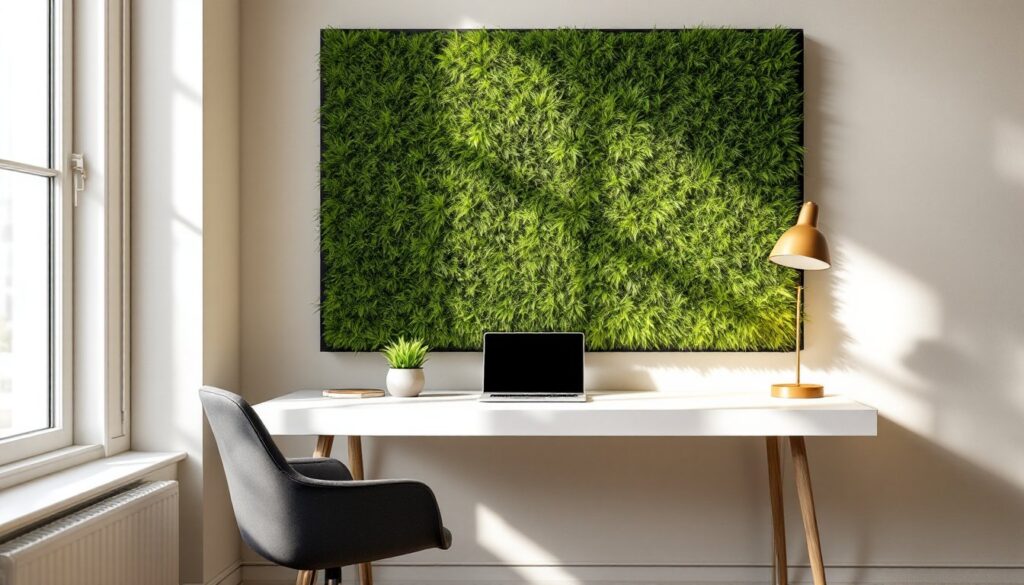
Mount a 12×24-inch grass strip directly behind your desk or vanity using adhesive-backed panels. This creates a textured backdrop for video calls or makeup tutorials without taking up floor space. Pair it with a simple LED strip light (warm white, 2700K) clipped to the top edge for subtle uplighting.
Headboard Feature Wall
Cover the wall behind your bed (or just a 4-foot-wide section) with interlocking grass tiles. This works especially well in bedrooms with minimal natural light, the green tones add warmth without requiring plant care. Secure tiles to drywall using adhesive or a grid of furring strips if the wall texture is rough.
For those looking to expand outdoor projects, similar porch decorating ideas can bring greenery to entryways using potted grasses or small vertical planters.
Safety note: Wear a dust mask when cutting synthetic grass: the backing releases fine particles.
Best Rooms and Spaces for Grass Wall Features
Not every wall is a good candidate. Match the installation type to the room’s conditions.
Home Offices and Studios
Grass walls reduce echo in rooms with hard floors and minimal soft furnishings. They also provide a non-distracting background for Zoom calls. Artificial panels work best here, no risk of pests or mold from irrigation.
Bathrooms (with Caveats)
Living grass thrives in bathroom humidity, but only if you have exhaust ventilation to prevent mildew. Install the wall opposite the shower to avoid direct water spray. Synthetic grass is safer in small powder rooms or half baths with no shower.
Several home improvement guides suggest pairing grass walls with natural stone or concrete tile for a spa-like aesthetic.
Living Rooms and Entryways
A statement grass wall works well in high-visibility areas like behind a sofa or in a foyer. Keep it away from heat sources (fireplaces, radiators, heat registers) that can dry out living grass or warp synthetic backing. If your living room gets direct afternoon sun, UV-resistant artificial panels are the better pick.
Kitchens
Use grass walls as a backsplash alternative in areas away from the stove. Grease and heat don’t mix well with either living or synthetic grass. A better application: a vertical herb garden system (similar concept, but with edible plants) near a window.
Outdoor Patios and Covered Porches
Both living and synthetic grass work outdoors, provided synthetic panels are rated for UV exposure. Secure them to exterior-grade plywood or a pressure-treated frame. For uncovered areas, living grass requires supplemental watering and may struggle in extreme heat or cold.
Maintenance Tips to Keep Your Grass Wall Looking Fresh
For Living Grass Walls
- Watering: Check soil moisture twice weekly. Overwatering causes root rot: underwatering leads to brown patches. Most systems need 0.5–1 gallon per square foot per week, depending on humidity.
- Fertilizing: Use a diluted liquid fertilizer (10-10-10 NPK ratio) every 4–6 weeks during active growth. Avoid granular formulas: they don’t distribute evenly in vertical systems.
- Trimming: Grass will grow. Trim with scissors or electric clippers every 3–4 weeks to maintain a uniform height. Collect clippings immediately to prevent mold.
- Pest monitoring: Check for aphids, spider mites, or fungus gnats monthly. Treat with insecticidal soap or neem oil as needed.
- Replanting: Expect to replace 10–15% of plants annually. Gaps are normal as individual plants reach end-of-life.
For more detailed plant care strategies, resources like The Spruce offer guides on indoor greenery maintenance.
For Artificial Grass Walls
- Dusting: Vacuum with a handheld or brush attachment monthly. Dust buildup dulls the color over time.
- Spot cleaning: Wipe spills or marks with a damp microfiber cloth. For stubborn stains, use a 50/50 mix of water and white vinegar.
- Restoring texture: If blades flatten, gently brush with a soft-bristle broom or pet grooming brush to lift fibers.
- UV protection: If the wall receives direct sun, consider applying a UV protectant spray annually (available at home centers). This extends color life by 2–3 years.
Seasonal Considerations
Living walls may go dormant in winter if indoor temps drop below 60°F or daylight decreases. Reduce watering and expect some browning: growth resumes in spring. Artificial walls are unaffected by seasons but benefit from a deep clean (remove and shake out panels) twice yearly.
Conclusion
Grass walls bring texture, color, and a dose of nature into spaces that need it most. Living systems offer authenticity and air-quality benefits but demand regular care and structural planning. Synthetic panels deliver low-maintenance impact with fewer variables, ideal for testing the concept or for renters. Either way, start with a manageable footprint, use proper mounting techniques, and don’t skip surface prep. A well-executed grass wall transforms a room from ordinary to memorable without the cost or timeline of a major renovation.