
A fireplace anchors a room like no other architectural feature. Whether it’s a working wood-burner, a gas insert, or a non-functional mantel, it’s where eyes land first, and where decorating decisions either elevate the space or fall flat. The challenge isn’t just filling the mantel with objects: it’s creating a cohesive focal point that reflects personal style while respecting the scale and function of the fireplace itself. Done right, fireplace decor shifts with the seasons, balances visual weight, and makes a room feel intentional. This guide walks through proven techniques, budget-friendly projects, and common pitfalls to avoid when styling any type of fireplace.
Table of Contents
ToggleKey Takeaways
- Fireplace decoration ideas succeed by using a neutral foundation with rotating seasonal accents rather than starting from scratch every few months.
- Balanced mantel styling follows the rule of keeping heaviest visual elements in the lower two-thirds to avoid top-heavy, unstable-looking arrangements.
- Artwork or mirrors above the mantel should span 60–75% of the mantel’s width to command attention without overwhelming the fireplace itself.
- Budget-friendly fireplace decor projects like DIY mantels, painted surrounds, and seasonal garlands cost under $50 and deliver high visual impact with minimal skill required.
- Common fireplace decorating mistakes include overcrowding the mantel with too many objects, ignoring scale proportions, and using flammable materials too close to active heat sources.
- Non-working and electric fireplaces offer creative opportunities to fill the firebox with stacked logs, candles, plants, or books while keeping heat-sensitive items 12+ inches away from LED elements.
Seasonal Fireplace Decor That Works Year-Round
Seasonal decor doesn’t mean starting from scratch every few months. The most practical approach uses a neutral foundation that accommodates rotating accents. A mantel anchored by candlesticks, a mirror, or a pair of vases stays constant, while smaller items, foliage, textiles, or filler objects, swap out.
For spring and summer, consider fresh greenery in ceramic pitchers, lightweight linen garlands, or a single statement piece like driftwood or coral. Avoid heavy textures that visually trap heat. Fall invites warmer tones: dried grasses, wheat bundles, terracotta pots, or matte-finish pumpkins (not the glossy plastic kind). Use a textured runner or burlap base to ground smaller items.
Winter decor leans into layering. Evergreen branches, pinecones, and candles in hurricane glass create depth without clutter. String lights work if they’re warm-white LEDs tucked behind garland, not draped like a storefront display. Avoid synthetic snow or glitter: both leave residue and look dated.
Year-round staples include:
- Candlesticks or lanterns in varying heights (odd numbers work best)
- Neutral vessels (ceramic, wood, metal) that hold seasonal filler
- A single oversized item like a framed print, large mirror, or sculptural object
The key is restraint. A mantel crammed with seasonal trinkets reads as cluttered, not festive. Rotate two or three accent pieces per season and leave breathing room between objects.
Mantel Styling Techniques for Every Design Aesthetic
Mantel styling follows the same spatial rules as any horizontal surface, but the vertical dimension matters more. A bare wall above a mantel feels unfinished: too much visual weight tips the balance.
Modern minimalist mantels use clean lines and limited color palettes. Think a single piece of abstract art, two sculptural candlesticks, and a low horizontal object like a stacked book set. Negative space is the design element here, don’t fill it.
Traditional or farmhouse styles layer textures and introduce symmetry. A large mirror or framed piece centers the composition, flanked by matching candlesticks or vases. Add a garland (real or faux eucalyptus works for most seasons) and a small tray or bowl for visual weight at the base.
Eclectic or collected looks mix heights, materials, and eras. Start with a large anchor piece (a painting, woven basket, or vintage sign), then build out with smaller objects in groups of three. Vary textures, wood, metal, ceramic, glass, and avoid matching sets. This style has the most leeway but still requires intentional placement.
Creating Balance and Symmetry
Symmetry feels formal: asymmetry feels relaxed. Both work, but mixing them reads as accidental.
For symmetrical arrangements, use identical objects (lamps, vases, frames) on either side of a centered focal point. Heights should mirror, and spacing should be equal. This works best for traditional or transitional interiors.
Asymmetrical balance requires more trial and error. Place a tall object on one side (a stack of books, a vase, or a tall candlestick) and counterbalance with multiple shorter items on the opposite side. The visual weight should feel even, even if the actual objects differ. Step back frequently: asymmetry that works from one angle can look lopsided from the sofa.
A common rule: keep the heaviest visual elements in the lower two-thirds of the mantel. Top-heavy arrangements feel unstable, especially on narrow mantels.
Incorporating Artwork and Mirrors Above the Mantel
The wall above a mantel is prime real estate. The piece hung here should be large enough to command attention but proportional to the mantel width.
Size guidelines: The artwork or mirror should span roughly two-thirds to three-quarters of the mantel’s width. A 60-inch mantel pairs well with a 40- to 48-inch-wide piece. Anything smaller looks like an afterthought: anything larger overwhelms the fireplace itself.
Vertical vs. horizontal orientation depends on ceiling height. Standard 8-foot ceilings pair better with horizontal or square pieces. Vaulted or 10-foot ceilings can handle taller vertical art, especially if the mantel is shallow.
Mirrors amplify light and make a room feel larger, but placement matters. A mirror directly above a fireplace reflects the ceiling, which isn’t visually interesting. Angling it slightly (if the frame allows) or choosing a mirror with a decorative frame that becomes the focal point solves this. Leaning a large mirror against the wall instead of hanging it adds a casual, layered look and skips the need for anchors in brick or stone.
For gallery walls above a mantel, keep the arrangement tight and centered. A scattered gallery wall competes with the mantel’s horizontal line. Use matching frames or a consistent mat color to unify the collection. The bottom edge of the lowest frame should sit 4 to 6 inches above the mantel to avoid a cramped appearance.
When hanging heavy pieces (mirrors, large frames) on brick or stone, use masonry anchors rated for the weight. Toggle bolts work for drywall but won’t grip masonry. If drilling into brick or stone feels daunting, leaning oversized art is a viable alternative.
Decorating Non-Working and Electric Fireplaces
Non-working fireplaces and electric inserts present different opportunities. The firebox itself becomes usable space, and there’s no need to worry about heat damage or soot.
For non-working fireplaces, the firebox can hold:
- Stacked birch logs (real or faux) for a rustic look
- Candles of varying heights on a metal tray (never leave unattended)
- A large potted plant like a fiddle-leaf fig or snake plant, especially if the firebox gets indirect light
- Books or vintage storage boxes stacked horizontally
Avoid leaving the firebox completely empty: it reads as unfinished. If the firebox has a damper, close it to prevent drafts and debris. For open fireboxes, a fireplace screen (even decorative, non-functional ones) adds visual interest.
Electric fireplaces often include LED flame effects and heating elements. The mantel and surround can be decorated like any other fireplace, but keep heat-sensitive items (wax candles, photos, electronics) at least 12 inches above the unit. Many electric inserts generate heat from the top vent, and prolonged exposure warps frames or melts candles.
Electric units also lack the depth of traditional fireplaces. Mantels should be shallower (6 to 8 inches deep) to avoid a top-heavy look. Lightweight decor, faux stems, small frames, ceramic pieces, works better than heavy objects that could tip forward.
If the electric fireplace sits in a media console or built-in, integrate decor with the surrounding shelving. Use the fireplace as the focal point and style the shelves with books, plants, and decorative objects that complement the mantel without duplicating it.
Budget-Friendly DIY Fireplace Decor Projects
Fireplace decor doesn’t require a designer budget. Many high-impact projects cost less than $50 and take an afternoon.
DIY Wood Mantel: If the existing mantel is dated or missing entirely, a simple wood beam adds instant character. A rough-sawn 6×6 or 6×8 beam (actual dimensions around 5.5 x 5.5 inches or 5.5 x 7.25 inches) mounts to the wall with heavy-duty brackets or lag bolts anchored into wall studs. Sand lightly, apply a stain or matte sealer, and mount. Cost: $30–$60 depending on wood species and length.
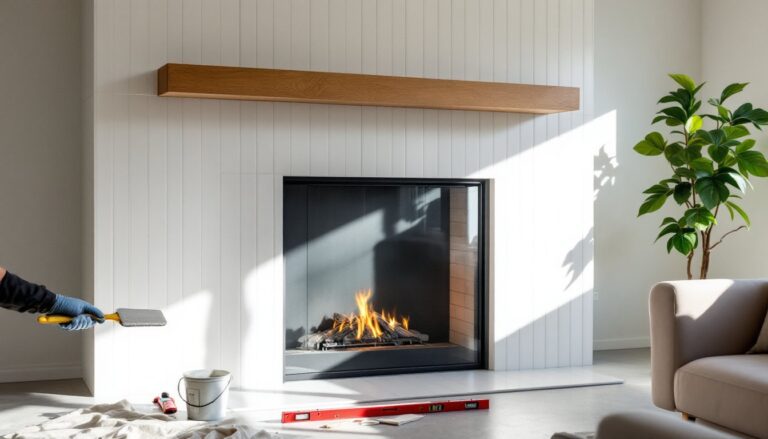
Painted Fireplace Surround: Dated brick or tile gets a refresh with heat-resistant paint. Use masonry primer followed by latex or chalk paint in a matte or eggshell finish. Glossy paint shows every imperfection on textured brick. Tape off the firebox opening and apply two coats with a brush or short-nap roller. Drying time: 24 hours between coats. Cost: $25–$40 for primer and paint.
Seasonal Garland: Instead of buying pre-made garland, make one from materials found in the yard or at a craft store. Wire together eucalyptus stems, olive branches, or pine boughs using floral wire and a base of jute rope or thick twine. Add in dried flowers, pinecones, or faux berries as filler. The result looks more organic than store-bought versions. Cost: $15–$25.
Farmhouse Sign or Artwork: Cut a 1×6 pine board to the desired width (stain or paint it), then use vinyl stencils or a paint pen to add a phrase or design. Seal with matte polyurethane. Lean it on the mantel or hang it above. Cost: $10–$20.
Candle Holders from Reclaimed Materials: Drill a 1.5-inch hole (using a spade bit) into a thick wood round, brick, or concrete block to hold a pillar candle. Sand the edges, apply a finish if desired, and group three or five on the mantel. Use LED candles if the fireplace is functional. Cost: $5–$15.
All of these projects require basic tools, a drill, saw, paintbrush, or wire cutters, and minimal skill. Surface prep (sanding, cleaning, priming) determines the finished quality more than the materials themselves.
Common Fireplace Decorating Mistakes to Avoid
Even experienced decorators make predictable errors when styling fireplaces. Here’s what to skip.
Overcrowding the mantel: A mantel isn’t a shelf for every collectible. Stick to three to five statement pieces plus a larger anchor (mirror or art). Anything more competes for attention and looks cluttered. If it feels too busy in person, it’ll photograph even worse.
Ignoring scale: Tiny objects on a wide mantel disappear. A 6-foot mantel needs decor with visual presence, tall candlesticks, oversized vases, or a large mirror. Conversely, a narrow mantel (under 48 inches) can’t support heavy or wide pieces without looking crowded.
Blocking the firebox with decor: If the fireplace is functional, don’t stack logs or decor inside the firebox during burning season. It’s a fire hazard and creates mess. Even non-working fireplaces benefit from a clear firebox: filling it with clutter looks like storage, not design.
Using flammable materials too close to heat: Dried grasses, paper garlands, and fabric runners ignite easily. Keep them at least 18 inches from an active firebox opening. For gas fireplaces with enclosed glass, check the manufacturer’s clearance guidelines, they vary by model.
Forgetting the hearth: The hearth (the floor area in front of the fireplace) is part of the composition. A decorative fireplace screen, a set of fire tools on a stand, or a simple woven basket for firewood completes the look. Leaving the hearth bare or using it for shoe storage undercuts the rest of the styling.
Matching everything too closely: A mantel with identical objects on both sides feels more like a showroom than a home. Vary heights, textures, and colors within a cohesive palette. For those interested in extending decor cohesion to other areas, the same principles apply.
Using the wrong hardware for wall-mounted pieces: Drywall anchors won’t hold a heavy mirror on brick. Masonry anchors or toggle bolts rated for the surface and weight are non-negotiable. If unsure, lean oversized pieces instead of risking improper installation.
Skipping a plan: Walking into a store and buying whatever looks good rarely works. Measure the mantel, note the wall color and surrounding furniture, and decide on a style direction before shopping. Many ideas from seasonal decor guides translate well when adapted to fireplace styling.
Similar to principles used in party decor planning, fireplace styling benefits from a clear theme and restraint. Avoid trends that don’t fit the home’s existing architecture or personal style. A rustic mantel in a mid-century modern room feels forced, no matter how well it’s styled. Work with the fireplace’s existing character, not against it.