A real fireplace sounds great until someone calculates the cost of a chimney chase, a masonry contractor, and annual inspections. For homeowners and renters who want the ambiance without the structural overhaul, fake fireplaces deliver style, warmth, and a focal point, minus the permits and six-figure price tag. Whether it’s an electric insert that actually heats a room or a DIY mantel built from trim boards and paint, these alternatives have evolved well beyond the plastic logs of decades past. They’re customizable, renter-friendly, and some even produce real flames. Here’s how to choose and install the right faux fireplace for any space.
Table of Contents
ToggleKey Takeaways
- Fake fireplace ideas offer homeowners and renters a cost-effective alternative to real fireplaces, with electric inserts ranging from $300 to $1,500 compared to $5,000+ for built-in gas or wood-burning units.
- Electric fireplace inserts provide supplemental heat (4,600 to 5,200 BTUs) to warm 400–500 square feet with realistic 3D holographic flame technology and require only a standard 120V outlet or dedicated circuit.
- DIY faux fireplace mantels can be built from MDF, plywood, and trim boards for under $200 and disassembled when moving, making them ideal for renters and budget-conscious homeowners.
- Decorative fireplace options using candles, LED string lights, or bioethanol burners create ambiance without ventilation requirements and can be easily refreshed with seasonal styling.
- Safety considerations for fake fireplaces include keeping combustibles 12 inches from heat outlets, maintaining proper clearance around bioethanol units, and never leaving real candles unattended.
Why Choose a Fake Fireplace for Your Home?
Fake fireplaces solve problems that real ones create. They don’t require a flue, a gas line, or approval from the HOA. Installation takes hours, not weeks, and doesn’t involve cutting through exterior walls or roof penetrations that can lead to leaks.
Electric and decorative models plug into standard 120V outlets, making them viable in apartments, condos, and finished basements where venting isn’t an option. They’re also reversible, renters can remove them without patching brickwork or replastering a firebox.
From a cost standpoint, a quality electric fireplace runs $300 to $1,500 depending on features, while a built-in gas or wood-burning unit easily exceeds $5,000 before installation labor. Faux options also sidestep ongoing costs like chimney sweeps, gas line inspections, and the need to stockpile seasoned firewood.
Safety is another factor. There’s no carbon monoxide risk, no sparks landing on carpets, and no need for annual flue cleaning. Homes with young children or pets benefit from cool-touch glass or flameless designs that eliminate burn hazards.
Finally, design flexibility is unmatched. A faux fireplace can be modern, farmhouse, industrial, or traditional, just swap the mantel surround or update the tile. Changing the look of a masonry fireplace, by contrast, requires a jackhammer and a dumpster.
Electric Fireplace Inserts: The Realistic Heat Solution
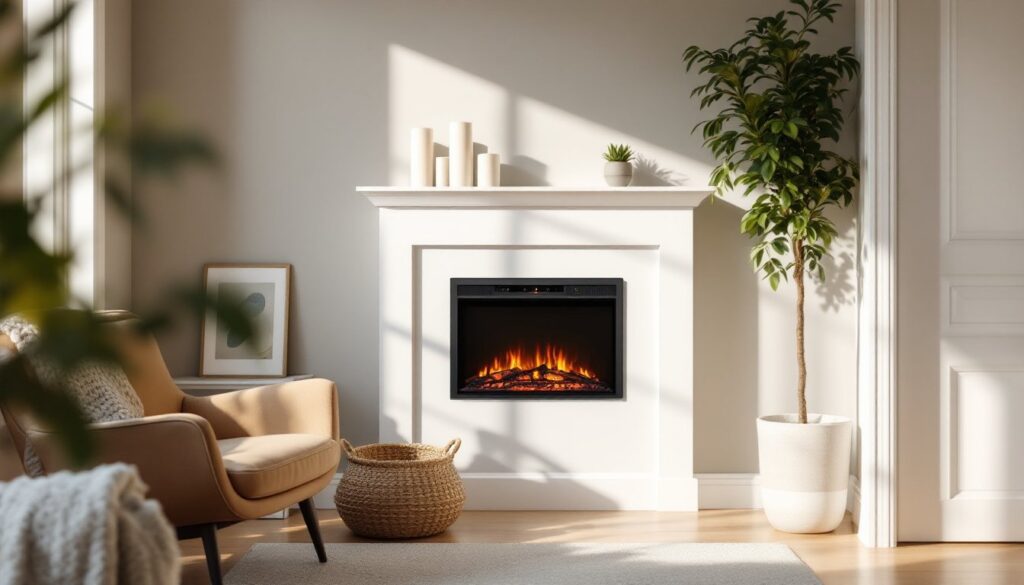
Electric inserts are the workhorse of the fake fireplace category. They produce supplemental heat (typically 4,600 to 5,200 BTUs), enough to warm 400 to 500 square feet, and most include LED flame effects with adjustable brightness and color.
These units drop into existing fireplace openings or mount directly on walls. Plug-in models require only a nearby outlet, while hardwired versions need a dedicated 15-amp or 20-amp circuit and should be installed by a licensed electrician to meet NEC (National Electrical Code) requirements.
Look for inserts with separate heat and flame controls, this lets homeowners run the visual effect year-round without turning the room into a sauna in July. Higher-end models include remote controls, programmable timers, and even smartphone connectivity.
When shopping, pay attention to flame realism. Older units use orange bulbs behind spinning reflectors, which look dated. Newer 3D holographic flame technology projects layered light through water vapor or mesh screens, creating depth and movement that mimics real combustion. Some models add crackling sound effects for extra ambiance, though that feature can usually be toggled off.
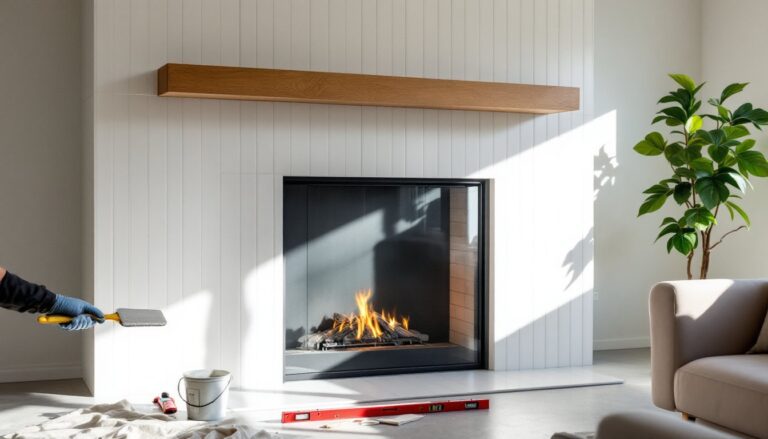
Installation is straightforward for most DIYers. Wall-mount units come with a bracket and screws, just locate studs with a stud finder, level the bracket, and secure it with 3-inch deck screws into the framing. Insert-style models slide into the firebox opening and are held in place with trim or a faceplate.
Safety note: Keep combustibles at least 12 inches away from the heat outlet. Even though electric fireplaces don’t produce open flames, the heating element can reach 140°F or higher. Wear safety goggles when drilling into walls, and use a dust mask if cutting into plaster or drywall.
DIY Faux Fireplace Mantels for Renters and Budget-Conscious Homeowners
Building a faux mantel from scratch is one of the most satisfying weekend projects. It adds architectural interest to a blank wall, costs under $200 in materials, and can be disassembled when it’s time to move.
The basic structure is a firebox surround made from MDF, plywood, or 1x lumber (which actually measures 3/4″ thick), topped with a mantel shelf built from a deeper board or stacked trim. The whole assembly either stands freeweight against the wall or attaches with L-brackets screwed into studs.
For a clean, modern look, use primed MDF panels for the surround and a single piece of 1×8 pine or poplar for the mantel. Paint everything with semi-gloss or satin interior paint for easy cleaning. Traditional styles call for stacked crown molding, pilasters, and a thicker mantel shelf made from doubled 1×6 or 1×8 boards.
Materials and Tools You’ll Need
Materials:
- (2) sheets of 1/2″ or 3/4″ MDF or plywood for sides and top
- (1) 1×6 or 1×8 board, 6 feet long, for the mantel shelf
- (1) box of 1-1/4″ finish nails or 18-gauge brad nails
- Wood glue (Titebond II or equivalent)
- Primer and interior paint (1 quart covers ~100 sq ft)
- Caulk (paintable acrylic latex)
- (Optional) Decorative trim molding for detailing
Tools:
- Miter saw or circular saw with a miter guide (for clean angle cuts)
- Drill/driver with bits
- Brad nailer (18-gauge) or hammer and nail set
- Level (24″ or 48″)
- Tape measure and pencil
- Sandpaper (120-grit and 220-grit)
- Safety goggles and dust mask
Assembly steps:
- Cut the firebox opening. Decide on dimensions, a typical faux firebox is 36″ to 42″ wide and 30″ to 36″ tall. Cut side panels, a top panel, and a bottom base from MDF.
- Assemble the surround. Use wood glue and brad nails to join the panels into a U-shape. Check for square with a framing square.
- Attach the mantel shelf. Center it over the surround, leaving a 3″ to 4″ overhang on each side. Secure from underneath with finish nails or pocket screws.
- Add trim (optional). Crown molding, baseboards, or picture frame trim dress up the surround. Cut miters at 45° for corners.
- Prime and paint. Fill nail holes with wood filler, sand smooth, then apply one coat of primer and two coats of paint.
- Secure to the wall. Use L-brackets screwed into wall studs at the top and sides. For drywall-only areas, toggle bolts or heavy-duty anchors rated for 50 lbs or more provide support.
Many decorative fireplaces featured in design showcases use this same basic framework. Once the structure is up, the firebox can be filled with candles, an electric log set, or even stacked birch logs for texture.
Decorative Fireplace Ideas Using Candles and Fairy Lights
For spaces where heat isn’t the goal, candles and LED string lights create the flicker and glow of a fire without electricity or ventilation. This approach works especially well in faux mantels, unused fireplaces, or repurposed media consoles.
Pillar candles in varying heights add dimension. Arrange three to five candles on a metal tray or ceramic tile base to catch drips and protect the firebox floor. Flameless LED candles with timers are safer for households with kids or pets and can run for weeks on AA batteries.
For a more dramatic effect, fill the firebox with a cluster of white or amber fairy lights. String them loosely around a stack of birch logs, driftwood, or even river stones. Battery-operated lights with remote controls simplify on/off switching and eliminate visible cords.
Mirror backing amplifies the light. Cut a piece of 1/4″ mirror glass to fit the back wall of the firebox (most glass shops will cut to size for under $30). The reflection doubles the perceived depth and brightness.
Seasonal swaps keep the look fresh. In winter, add pinecones and faux greenery. In summer, fill the space with white candles and coral. Fall calls for mini pumpkins and amber lights.
Safety reminder: If using real candles, never leave them unattended. Keep wicks trimmed to 1/4″, and position candles at least 12 inches away from any fabric, paper, or hanging decor.
Modern Bioethanol and LED Flame Fireplaces
Bioethanol fireplaces burn denatured ethanol fuel in a steel burner, producing real flames without smoke, ash, or the need for a chimney. They’re popular in modern and minimalist interiors where a vent-free, clean-burning flame is desired.
These units come as tabletop models, wall-mounted panels, or freestanding towers. Fuel consumption varies, but a typical burner holds 1 to 2 liters and runs for 3 to 5 hours per fill. Bioethanol costs roughly $3 to $5 per liter, depending on the brand and region.
Because they produce real combustion, bioethanol fireplaces require adequate ventilation. Crack a window or run an exhaust fan to prevent CO₂ buildup in smaller rooms. They also generate heat, about 3,000 to 6,000 BTUs, so they’re not purely decorative.
Installation is minimal. Wall-mount units attach with masonry anchors or lag bolts into studs, while tabletop and freestanding models simply sit in place. Always follow the manufacturer’s clearance requirements (usually 24″ to 36″ from combustibles).
LED flame fireplaces, by contrast, use LED strips and reflective panels to simulate flames with zero emissions. They’re increasingly realistic, especially models that incorporate water vapor mist to mimic smoke rising from logs. These run on standard household current and cost pennies per day to operate.
For design-focused homeowners, interior styling guides from sources like MyDomaine often highlight bioethanol fireplaces as statement pieces in open-plan living rooms or outdoor patios.
Styling Your Fake Fireplace: Decor Tips and Seasonal Touches
A faux fireplace becomes a true focal point when the mantel and hearth are thoughtfully styled. Start with a large mirror or artwork centered above the mantel. The piece should be roughly two-thirds the width of the mantel shelf for balanced proportions.
Layer in candlesticks, vases, or small sculptures at varying heights. Group items in odd numbers (threes or fives) for visual interest. Leave some negative space, overcrowding the mantel makes it look cluttered rather than curated.
Inside the firebox, fill the space with texture. Stacked firewood (real or faux) adds rustic warmth. Decorative screens in brass or iron provide a traditional touch. For a modern vibe, try a geometric metal sculpture or a row of oversized pillar candles on a slate slab.
Seasonal swaps are simple. In autumn, drape a garland of faux leaves and mini pumpkins across the mantel. Winter calls for evergreen branches, pinecones, and string lights. Spring and summer work well with fresh flowers, coastal elements like shells and driftwood, or even a collection of vintage books.
Hearth decor matters too. If the faux fireplace sits on the floor, add a hearth rug or a row of woven baskets to ground the design. For wall-mounted units, consider a floating shelf below to hold plants or decor.
Resources like The Spruce offer room-by-room styling guides that translate well to faux fireplace setups, especially for homeowners looking to refresh a space without major renovations.
Remember: the best fake fireplace is one that fits the room’s function and the homeowner’s skill level. Whether it’s a plug-in insert, a DIY mantel, or a candle-filled firebox, the goal is warmth and style, without the sawdust, permits, or masonry bills.