Artificial turf has evolved far beyond the stiff, plasticky rolls of the past. Today’s synthetic grass products mimic natural lawns with varied blade heights, realistic color variation, and soft textures that actually feel good underfoot. For homeowners tired of patchy grass, endless watering, or concrete slabs that radiate heat all summer, fake grass patios offer a practical middle ground, green space without the maintenance burden. This guide walks through design ideas, installation basics, and tips to make synthetic turf look convincing on patios, balconies, and outdoor living areas.
Table of Contents
ToggleKey Takeaways
- Modern fake grass patio ideas combine durability, water savings, and design flexibility, lasting 10–15 years without fading or requiring constant watering.
- Artificial turf works on diverse surfaces—rooftops, balconies, and shaded areas—where natural grass cannot, offering installation flexibility for hard-to-landscape spaces.
- Mixing synthetic turf with pavers, stone borders, and natural plants creates a natural-looking patio that avoids the artificial ‘putting green’ appearance.
- Proper installation requires a compacted base, landscape fabric, correct infill (silica sand or crumb rubber), and secure edging to prevent turf lifting and ensure long-term performance.
- Maintenance remains minimal—monthly rinsing, periodic brushing, and enzyme cleaning in pet areas keep fake grass patios fresh for over a decade of use.
- Choose varied blade heights and mixed color shades in artificial turf products to achieve a convincing, realistic look that natural-colored single-tone options cannot match.
Why Choose Artificial Turf for Your Patio?
Durability is the biggest draw. Quality synthetic turf holds up under furniture, foot traffic, and UV exposure for 10–15 years without fading or flattening significantly. Unlike natural grass, it won’t turn brown in drought or develop bare spots from heavy use.
Water savings matter in drought-prone regions. A 300-square-foot patio planted with real grass can demand 15–20 gallons per week during summer. Artificial turf eliminates that entirely, though occasional rinsing helps remove dust and pet waste.
Allergy reduction is a bonus many overlook. No grass pollen, no mowing emissions, no fertilizer off-gassing. For households with sensitivities, that’s a tangible quality-of-life improvement.
Installation flexibility lets homeowners green spaces that soil-based lawns can’t reach, rooftops, shaded courtyards, or areas with poor drainage. Synthetic turf doesn’t need six inches of topsoil or consistent sunlight.
The trade-offs: upfront cost runs $5–$20 per square foot installed, depending on pile height, infill type, and base prep. Heat retention is real, darker turf can reach 120°F in direct sun, so choose lighter shades or plan for shade structures. And while modern products look convincing from a few feet away, close inspection reveals the synthetic texture.
Modern Fake Grass Patio Designs to Inspire Your Project
Rooftop and Balcony Turf Installations
Weight is the first concern. Rooftop installations require lightweight base materials, typically a thin layer of recycled rubber or foam padding instead of crushed stone. Check your building’s load capacity before ordering materials: most residential roofs handle 20–30 pounds per square foot, but turf plus base adds up fast.
Drainage is critical. Rooftops already have membrane waterproofing, so lay perforated turf with a drainage mat underneath to prevent standing water. Secure edges with adhesive or perimeter trim to resist wind uplift, rooftop wind speeds can be 30% higher than ground level.
Balcony projects work well with interlocking turf tiles, which install over existing concrete or composite decking without adhesives. Tiles typically measure 12×12 inches and snap together with plastic connectors. They’re removable, making them renter-friendly.
For visual interest, designers often frame turf areas with low-profile planters or use contrasting textures, smooth concrete edges against soft grass creates clean lines. Many artificial grass installations pair turf with potted natives or ornamental grasses to soften the perimeter.
Combining Fake Grass with Pavers and Hardscaping
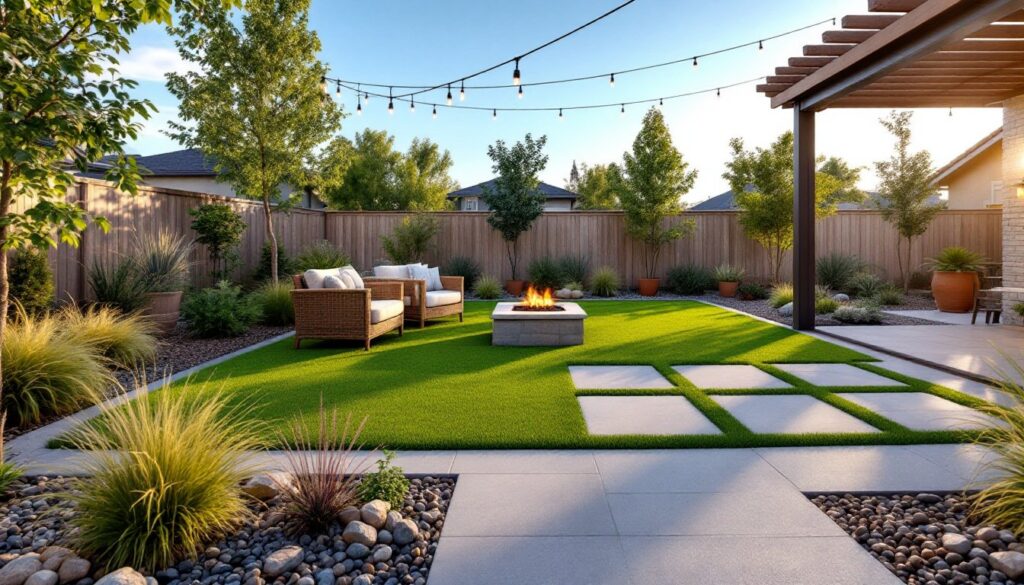
Mixing materials breaks up monotony. A popular layout uses 24×24-inch pavers set in a grid pattern with turf filling the gaps. This reduces turf square footage (lowering cost) while adding structure.
To install this pattern:
- Excavate the patio area to 3–4 inches below finish grade.
- Lay a compacted gravel base (crushed granite or decomposed granite works well).
- Set pavers on a 1-inch sand bed, using a level and rubber mallet to ensure even height.
- Cut turf sections to fit between pavers, leaving a 1/4-inch expansion gap around each piece.
- Secure turf edges with 6-inch galvanized nails or landscape staples every 4–6 inches.
Stone borders, flagstone, bluestone, or stacked slate, create defined edges that prevent turf from creeping. This also gives mowers or edgers a clear stopping point if the turf meets a natural lawn.
For patios with built-in fire pits or outdoor kitchens, use turf as an accent zone rather than the primary surface. Position it in lounge areas or under dining tables where kids and pets gather, while keeping high-traffic cooking zones paved. Fire codes typically require non-combustible surfaces within 10 feet of open flames, so plan accordingly.
Modern designs also incorporate lighting. Low-voltage LED strip lights installed along paver edges or beneath turf seams create ambient glow after dark. Just ensure wiring is routed through conduit to prevent damage during installation.
How to Install Artificial Grass on Your Patio
Safety first: Wear leather gloves when cutting turf (the backing can fray and cause cuts), knee pads during installation, and safety glasses if using a power saw to trim edges.
Materials list:
- Artificial turf (measured to your patio dimensions plus 10% overage)
- Crushed granite or decomposed granite base (if installing over soil)
- Landscape fabric (weed barrier)
- 6-inch galvanized landscape nails or turf staples
- Turf adhesive or seaming tape (for joining sections)
- Silica sand or crumb rubber infill
- Push broom or power broom
Tools needed:
- Plate compactor (rental, ~$75/day)
- Utility knife with hooked blades
- Carpet kicker (optional, helps stretch turf tight)
- Seaming iron (if joining multiple rolls)
Step-by-step installation:
-
Prepare the base. For soil patios, excavate 2–3 inches and fill with crushed granite. Compact in 1-inch lifts using a plate compactor until firm. For concrete patios, skip excavation, just sweep clean and check for drainage slope (minimum 1/4 inch per foot).
-
Lay landscape fabric. Overlap seams by 6 inches and secure with staples. This prevents weeds without blocking drainage.
-
Roll out turf. Let it acclimate in the sun for 2–3 hours to relax wrinkles. Position it so blade direction faces the main viewing angle (blades should lean toward where people will look at the patio).
-
Trim to fit. Cut from the backing side using a utility knife, following the stitch lines between rows. For curved edges, make relief cuts every 4–6 inches to prevent bunching.
-
Secure edges. Drive nails every 4–6 inches along the perimeter, keeping them 1 inch from the edge to avoid fraying.
-
Join seams (if needed). Butt edges together tightly, don’t overlap. Slide seaming tape underneath, apply turf adhesive, and press down with a roller. Use a seaming iron on medium heat to activate adhesive if your product requires it.
-
Add infill. Spread 1.5–2 pounds per square foot of silica sand or crumb rubber evenly. Brush against the grain with a stiff push broom to work infill down to the base. This weighs down the turf and helps blades stand upright.
-
Final brush. Go over the entire surface with a power broom (rental or purchase around $200) or a stiff-bristled push broom to lift flattened blades.
Permit check: Most jurisdictions don’t require permits for non-structural patio surfacing, but verify with your local building department if you’re altering drainage patterns or installing over a deck.
Design Tips for a Natural-Looking Turf Patio
Choose varied pile heights. Products with 1.5–2-inch blades in mixed shades (olive, lime, and tan) read more convincingly than single-color, uniform-height turf. Look for “thatch” layers, short brown fibers woven into the base that mimic dead grass.
Avoid perfect rectangles. Natural lawns have irregular edges. If your patio allows, cut curves or organic shapes rather than ruler-straight lines. Even a slight wave along one border softens the look.
Layer textures. Pair turf with natural elements, river rock along edges, mulched plant beds, or reclaimed wood accents. When homeowners mix synthetic grass with organic landscaping materials, the contrast actually helps both elements stand out.
Mind the infill. Silica sand is budget-friendly but can compact over time. Crumb rubber (recycled tire material) stays springy longer but retains more heat. Newer options like coated sand or zeolite offer antimicrobial properties and better drainage, expect to pay $1–$2 more per pound.
Use edging. Flexible plastic or aluminum edging (sold in 10-foot coils) prevents turf edges from lifting and creates a clean transition to pavers or gravel. Install it so the top sits 1/4 inch below the turf surface.
Plan for drainage. Turf drains through perforations in the backing (typically 30–50 holes per square foot), but standing water indicates poor base prep. If your patio slopes toward the house, install a French drain or redirect runoff with a shallow channel before laying turf.
Incorporate real plants strategically. Potted ornamental grasses, succulents, or small shrubs placed on or around the turf add living elements that break up the synthetic look. Regional choices matter, what works for Southern patio designs (crepe myrtles, knockout roses) differs from arid-climate selections (agave, yucca).
Maintain it right. Monthly rinsing with a garden hose removes dust and pollen. For pet areas, use an enzyme cleaner formulated for synthetic turf to neutralize odors. Brush high-traffic zones every few weeks to keep blades upright. Avoid placing hot grills or fire pits directly on turf, melted plastic is permanent.
Conclusion
Artificial turf patios deliver year-round green space with a fraction of the maintenance natural grass demands. The upfront investment pays off in water savings, reduced upkeep, and design flexibility that works for rooftops, balconies, and hard-to-landscape areas. Choose products with realistic texture variation, prep the base properly, and mix in natural materials to avoid the “putting green” look. With decent installation and occasional brushing, a well-designed turf patio holds up for over a decade of barefoot summers and outdoor gatherings.