Living in a tiny house means every piece of furniture needs to earn its spot, literally. When square footage is under 400 square feet, a poorly chosen sofa or bulky dining table doesn’t just cramp the space: it disrupts how someone moves, sleeps, and functions daily. The difference between a tiny house that feels claustrophobic and one that feels just right comes down to deliberate furniture choices. This isn’t about decorating trends or aesthetic inspiration. It’s about understanding dimensional constraints, weight distribution on trailers (if mobile), and how multi-functional furniture actually performs in real-world use.
Table of Contents
ToggleKey Takeaways
- Tiny house furniture must fit strict dimensional constraints (28–32 inch doorways, 36–48 inch loft headroom) and serve multiple purposes to justify its footprint.
- Multi-functional furniture like Murphy beds, convertible sofas, and fold-down tables is essential, not optional, for functional tiny house living.
- Weight distribution matters critically for mobile tiny houses; every furniture piece must be weighed against GVWR limits (10,000–14,000 pounds) to avoid overloading.
- Accurate measurements of doorways, ceiling heights, and traffic flow clearances (24–30 inches minimum) prevent costly purchases of furniture that won’t fit or function.
- DIY custom-built furniture projects (platform beds, wall desks, built-in benches) cost $40–150 per piece and adapt better to odd dimensions than off-the-shelf options.
- Specialty tiny house retailers, mainstream compact furniture with modifications, and RV suppliers offer viable sourcing options, each with distinct cost and customization trade-offs.
Why Choosing the Right Furniture Makes or Breaks Tiny Living
Standard residential furniture is built for homes with 8-foot ceilings, wide doorways, and rooms that average 200+ square feet. Tiny houses operate on completely different spatial logic. A conventional queen mattress (60″ x 80″) can consume half the floor space in a sleeping loft. A standard 3-seat sofa (84″ long) blocks circulation paths in most tiny house living areas.
Furniture selection impacts structural considerations too. Tiny houses on trailers have strict weight limits, typically 10,000 to 14,000 pounds GVWR (Gross Vehicle Weight Rating) for the entire structure and contents. A solid wood dining table might weigh 150+ pounds: that’s weight better allocated to essential systems or lighter, engineered alternatives.
Beyond measurements and load capacity, furniture determines whether daily routines actually work. Can someone open the refrigerator without moving a chair? Does the bed interfere with ceiling fan clearance? These aren’t hypothetical design questions, they’re functional deal-breakers that show up the first week of occupancy.
The right furniture for tiny homes respects these constraints without compromising livability. It fits through narrow doorways (usually 28–32 inches), operates within tight clearances, and often serves multiple purposes to justify the footprint it occupies.
Essential Furniture Pieces Every Tiny House Needs
Not every tiny house requires the same furniture lineup, but most need core pieces that handle sleeping, seating, eating, and storage. Here’s what typically makes the cut:
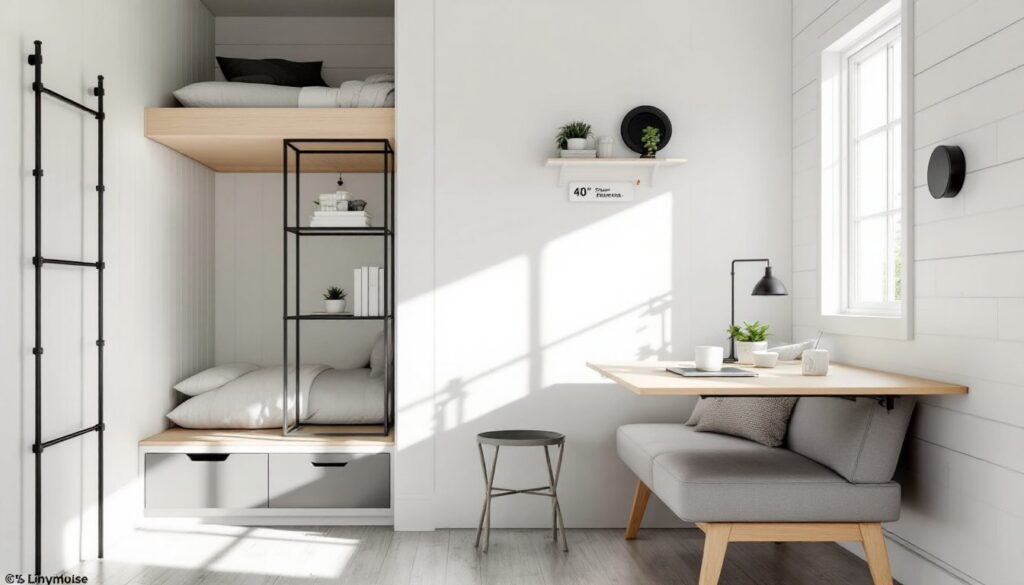
Sleeping solutions: Murphy beds, loft beds with 36–48 inch headroom clearance, or convertible sofas. Standard bed frames waste vertical space, opt for platform beds with built-in storage drawers underneath.
Seating: Compact loveseats (60–72 inches), modular sectionals that separate for cleaning or reconfiguration, or built-in bench seating with lift-top storage. Avoid recliners unless wall clearance allows the extended footrest (typically 30+ inches).
Tables: Drop-leaf tables, wall-mounted fold-down desks, or nesting tables. A 24″ x 36″ table seats two comfortably and folds away when not in use.
Storage: Vertical shelving units (floor-to-ceiling), storage ottomans, and furniture with hidden compartments. Every piece should either provide storage or justify why it doesn’t.
Multi-Functional Furniture: The Foundation of Tiny House Design
Multi-functional pieces aren’t a design trend for tiny houses, they’re a baseline requirement. A sofa that converts to a guest bed eliminates the need for a separate sleeping space. A dining table with fold-out extensions serves as workspace during the day and dining area at night.
Look for furniture with dual-purpose engineering, not just marketing claims. A storage ottoman should have reinforced lid hinges rated for 200+ pounds if it’ll serve as seating. Sofa beds need actual mattress support, metal bar frames cause back problems after the first night.
Built-ins offer the best space efficiency but reduce flexibility. A custom bench with storage maximizes every inch, but can’t be repositioned if the layout changes. Freestanding multi-functional furniture offers a middle ground: purposeful design with the option to rearrange.
Consider weight and assembly. Multi-functional pieces with mechanical components (fold-out mechanisms, hydraulic lifts) add pounds. If building in a tiny house on a trailer, tally furniture weight against the GVWR before purchasing.
Space-Saving Furniture Ideas for Different Tiny House Zones
Each zone in a tiny house has specific spatial demands. What works in the sleeping loft won’t necessarily fit the kitchen nook.
Living area: Wall-mounted drop-leaf tables save 18–24 inches of floor space when folded. Stackable stools tuck under counters or hang on wall hooks. Skip the coffee table entirely, use a storage ottoman or nesting side tables instead.
Kitchen/dining: Fold-down countertop extensions add 12–18 inches of prep space when cooking, then disappear afterward. Install a fold-out table secured to the wall with heavy-duty bracket hinges rated for 150+ pounds per pair. Bar-height seating (30-inch stools) takes less visual space than standard chairs.
Sleeping loft: Platform beds with drawers eliminate the need for a separate dresser. Headboard shelves provide nightstand storage without floor footprint. Ensure mattress thickness (typically 6–8 inches for lofts) allows sitting upright without hitting the ceiling.
Bathroom: Wall-mounted sinks and toilets free up floor space. Corner shelving units use often-wasted angles. A fold-down shower bench mounts to the wall and supports 250+ pounds when needed.
Workspace: Wall-mounted desks with fold-down surfaces work when space is tight. Floating shelves above provide storage without legs interfering with knee clearance (plan 24–28 inches minimum). For those following creative furniture modifications, small cabinets can be repurposed into compact desk organizers.
How to Choose Furniture That Fits Your Tiny House Dimensions
Measuring isn’t optional, it’s the difference between furniture that fits and a $600 sofa blocking the hallway. Before shopping, document every dimension:
Floor plan measurements: Note all doorway widths (interior and exterior), ceiling heights in each zone, and clearance around fixtures (toilet, sink, appliances). Most tiny house doorways are 28–32 inches wide: furniture must fit through or be assembled inside.
Vertical clearance: Loft areas typically have 36–48 inches of headroom. Measure from the sleeping surface to the ceiling peak, not the floor. A 10-inch mattress reduces usable headroom to 26–38 inches, fine for sleeping, tight for sitting up.
Traffic flow: Allow 24–30 inches of clearance for primary walkways. Furniture placement that blocks this creates daily frustration. Sketch the floor plan to scale (graph paper works) and cut out furniture templates before buying.
Weight limits: Loft floors in tiny houses on trailers must support occupants plus furniture. Standard residential floor joists handle 40 pounds per square foot (PSF) live load: confirm your specific build meets this, especially if using lightweight construction methods.
Assembly restrictions: Some furniture ships flat-pack and assembles on-site. Others arrive fully assembled. A 72-inch sofa that doesn’t disassemble won’t make a 90-degree turn in a narrow hallway, even if it fits through the door.
Measure twice, order once. And always confirm return policies before purchasing, even accurate measurements can miss unforeseen spatial conflicts.
DIY Tiny House Furniture Projects for Budget-Conscious Homeowners
Custom-built furniture fits odd dimensions and costs less than specialty tiny house retailers. These projects suit intermediate DIYers comfortable with basic joinery.
Platform bed with storage: Build a simple frame from 2×6 or 2×8 lumber (actual dimensions: 1.5″ x 5.5″ or 1.5″ x 7.25″). Use pocket screws or half-lap joints for frame connections. Add 3/4-inch plywood decking and slide plastic storage bins underneath. Total cost: $80–150 depending on lumber grade and bin quantity.
Fold-down wall desk: Mount a 3/4-inch plywood or hardwood panel (24″ x 36″) to the wall using piano hinges rated for the panel weight. Add a fold-down leg or chain support rated for 100+ pounds. Finish with polyurethane or paint. Cost: $40–70.
Built-in bench seating: Frame a bench with 2×4 studs secured to wall studs (locate with a stud finder). Top with 3/4-inch plywood, add foam cushioning, and upholster with durable fabric. Include lift-top storage using lid support hinges. Cost: $60–120.
Safety note: Always wear safety glasses and hearing protection when cutting lumber. Use a miter saw for clean angle cuts, though a circular saw with a guide works for straight cuts. Pre-drill screw holes to prevent splitting, especially near board ends.
For those seeking free furniture building plans, many designs adapt well to tiny house dimensions with minor modifications. Scale down overall dimensions but maintain structural lumber sizes to preserve strength.
Where to Buy Tiny House Furniture: Best Resources and Retailers
Tiny house furniture comes from three main sources: specialty retailers, adaptable mainstream furniture, and custom builders.
Specialty tiny house retailers sell furniture engineered for small spaces. Expect to pay 20–40% more than conventional furniture, but pieces arrive pre-sized and tested for tiny house use. These retailers understand weight restrictions and provide specifications for trailer-based homes.
Mainstream furniture with modifications offers better pricing. IKEA, Wayfair, and Target carry compact furniture that works in tiny houses with careful selection. Look for modular designs, stackable pieces, and published dimensions. Many small space apartment solutions translate directly to tiny house applications, just verify measurements first.
Custom furniture builders create pieces for odd dimensions or specific needs. Local woodworkers or cabinet makers can build a loft bed frame that fits a sloped ceiling or a bench that wraps an awkward corner. Get itemized quotes and confirm lead times (often 4–8 weeks for custom work).
RV furniture suppliers provide another option. RV furniture is built light and sized for tight spaces, though styling skews traditional. Check weight ratings and mounting requirements, some RV furniture expects specific wall construction.
Used and repurposed sources: Thrift stores, estate sales, and Craigslist occasionally yield compact vintage pieces. Measure before buying and inspect structural integrity (check joints, drawer slides, upholstery condition).
Wherever you buy, confirm shipping dimensions (packaged furniture may be larger than the assembled piece), return policies, and weight specifications if provided. For tiny houses on trailers, every furniture choice affects total rig weight and balance.