When it comes to dinner prep, time is often of the essence. Thawing chicken can feel like an eternity, especially when hunger strikes. Thankfully, there are quick and safe methods to get that frozen chicken ready for cooking in no time.
Understanding how to thaw chicken fast not only saves time but also ensures that meals stay safe and delicious. Whether it’s for a last-minute stir-fry or a family dinner, knowing the right techniques can make all the difference. Let’s dive into effective strategies that will have that chicken thawed and ready to cook in a flash.
Methods for Thawing Chicken
Thawing chicken quickly and safely is essential for effective meal preparation. Here are two common methods to expedite the process.
Cold Water Method
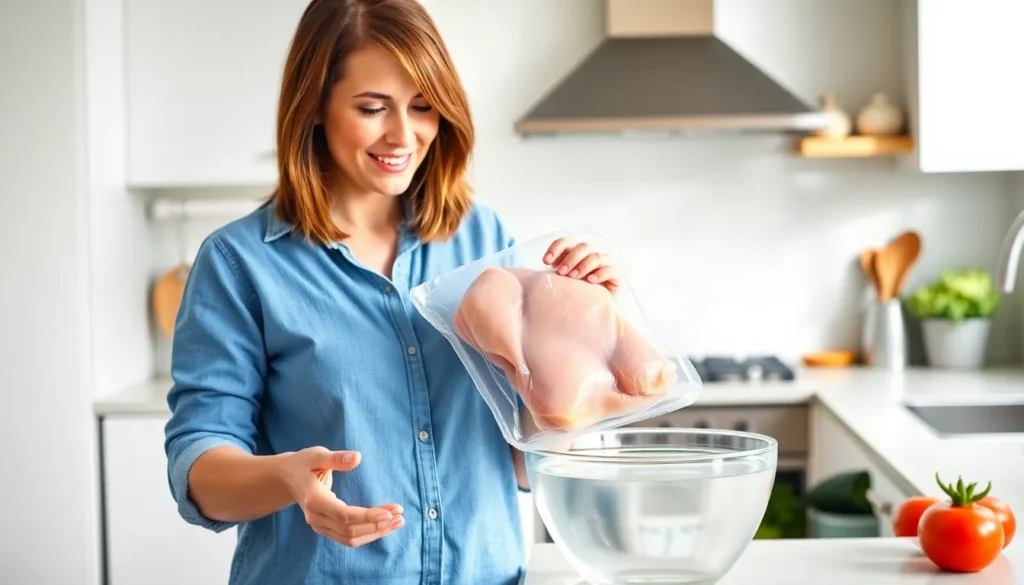
Using the cold water method allows for effective thawing in a shorter timeframe. To implement this method:
- Seal the Chicken: Place the chicken in a leak-proof plastic bag to prevent water from entering.
- Submerge in Cold Water: Fill a bowl or sink with cold water, then submerge the sealed chicken.
- Change Water Regularly: Replace the water every 30 minutes to maintain a safe temperature.
This method typically thaws chicken at approximately 1 pound per hour.
Microwave Method
The microwave method offers the fastest thawing option. For optimal results:
- Use Microwave-Safe Dish: Place the chicken in a microwave-safe dish to catch any drips.
- Select Defrost Setting: Use the defrost setting based on the chicken’s weight, following manufacturer instructions.
- Monitor Closely: Rotate or flip the chicken halfway through to ensure even thawing.
Chicken thawed in the microwave should be cooked immediately to prevent bacterial growth.
Safe Thawing Practices
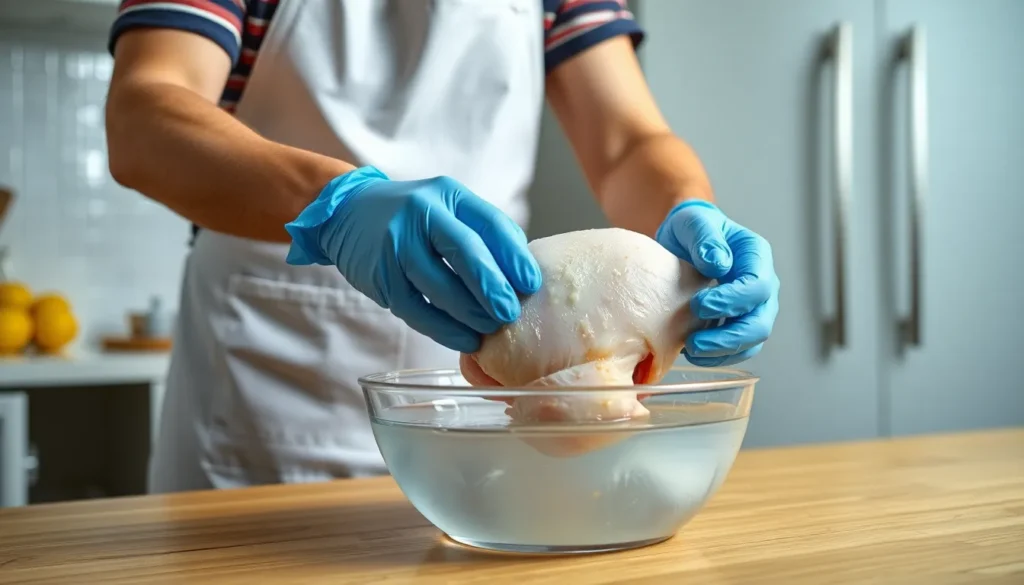
Safe thawing practices are crucial to prevent bacterial growth and ensure food safety when preparing chicken. Following recommended techniques avoids the risk of foodborne illnesses.
Avoiding Bacterial Growth
Avoiding bacterial growth begins with proper thawing. Chicken left out at room temperature can reach temperatures dangerous for bacteria to thrive. Thaw chicken in the refrigerator, cold water, or microwave instead. When using the cold water method, change the water every 30 minutes to keep it cold and discourage bacteria. For microwave thawing, cook the chicken immediately after thawing, as microwaves can leave some areas at unsafe temperatures.
Temperature Control
Temperature control plays a vital role in safely thawing chicken. Refrigerators should maintain a temperature of 40°F or lower, ensuring chicken stays within a safe range. When using the cold water method, keep the water temperature below 70°F. In the microwave, follow the appliance’s instructions for weight-based defrosting to ensure even thawing. Monitoring temperature prevents any parts of the chicken from entering the “danger zone,” where bacteria multiply rapidly.
Tips for Thawing Chicken Faster
Effective thawing techniques streamline meal preparation and reduce stress. Implement the following tips for quicker and safer thawing of chicken.
Planning Ahead
Planning ahead minimizes the time required for thawing chicken. When possible, transfer frozen chicken from the freezer to the refrigerator the night before cooking. This method ensures even thawing at a safe temperature. For unexpected meal changes, consider the cold water method to reduce thawing time significantly by sealing chicken in a leak-proof bag and submerging it in cold water. Adjustments can effectively expedite meal prep and maintain food safety.
Utilizing Kitchen Tools
Utilizing the right kitchen tools can enhance the thawing process. Microwaves equipped with defrost settings allow for fast thawing based on the weight of the chicken. Thermometers measure the internal temperature, ensuring chicken reaches at least 165°F during cooking. Pressure cookers can also effectively cook thawed chicken quickly, reducing overall cooking time. By leveraging these kitchen tools, individuals can achieve efficient thawing and safe meal preparation.
Alternatives to Thawing Chicken
Several efficient alternatives exist for preparing chicken without the need for thawing. These methods either involve cooking the chicken from its frozen state or utilizing pre-cooked chicken options for quick meal preparation.
Cooking from Frozen
Cooking chicken from frozen enhances convenience without sacrificing safety or flavor. Methods like baking, grilling, or sautéing are effective for reaching a safe internal temperature of 165°F.
- Baking: Bake frozen chicken in a preheated oven, typically at 350°F, increasing cooking time by approximately 50%.
- Grilling: Grill frozen chicken over medium heat, allowing for thorough cooking while ensuring even browning.
- Sautéing: Sauté frozen chicken pieces, adequately adjusting cooking times for uniform results and avoiding undercooked spots.
With both methods, using a meat thermometer to check the internal temperature is crucial to ensure safe consumption.
Pre-Cooked Chicken Options
Using pre-cooked chicken offers a fast solution for meal preparation. Several options include rotisserie chicken, canned chicken, or frozen pre-cooked chicken strips.
- Rotisserie Chicken: Often available at grocery stores, rotisserie chicken provides flavor and convenience, ready to use in various dishes.
- Canned Chicken: Canned chicken serves as a protein source, ideal for salads, soups, or casseroles, requiring no preparation or thawing.
- Frozen Pre-Cooked Chicken Strips: Pre-cooked frozen chicken strips or nuggets can be heated quickly in an oven or microwave, yielding a quick protein addition to meals.
These alternatives successfully streamline meal preparation while ensuring safe and delicious chicken dishes.
Thawing chicken quickly and safely is crucial for efficient meal preparation. By employing the cold water or microwave methods individuals can save time while ensuring food safety. It’s important to avoid room temperature thawing to prevent bacterial growth.
Planning ahead by thawing chicken in the refrigerator or using alternatives like cooking from frozen can also streamline the cooking process. With these techniques at hand anyone can enjoy delicious chicken dishes without the stress of lengthy thawing times. Embracing these methods not only enhances cooking efficiency but also promotes safe food handling practices.