
Diving into the world of above ground pools can feel like cannonballing into the deep end—exciting but a bit overwhelming. For beginners, maintaining that sparkling oasis might seem like a daunting chore. Fear not! With the right tips and tricks, keeping your pool pristine can be as easy as floating on a raft with a cold drink in hand.
Understanding Your Above Ground Pool
Above ground pools offer a fun and accessible way to enjoy swimming at home. Understanding the types of pools and their essential components simplifies maintenance tasks.
Types of Above Ground Pools
Several types of above ground pools cater to different preferences. Frame pools feature a sturdy metal structure and are popular for their durability. Inflatable pools, on the other hand, provide an easy setup, ideal for casual swimmers. Others include hybrid pools, combining steel and resin for added strength. Choosing the right type depends on budget and intended usage. Each type demands specific maintenance requirements, so knowing these helps prepare owners.
Essential Components and Functions
Familiarity with key components ensures effective pool care. The pool liner protects the structure and maintains water quality. Filters circulate water, removing debris and contaminants for a clean swimming environment. Pumps facilitate water movement, supporting filtration and hygiene. Skimmers collect surface debris, contributing to overall cleanliness. Lastly, pool chemicals maintain balanced water chemistry, preventing algae growth and ensuring safety. Understanding each component’s role aids in smoother maintenance routines.
Basic Maintenance Tasks
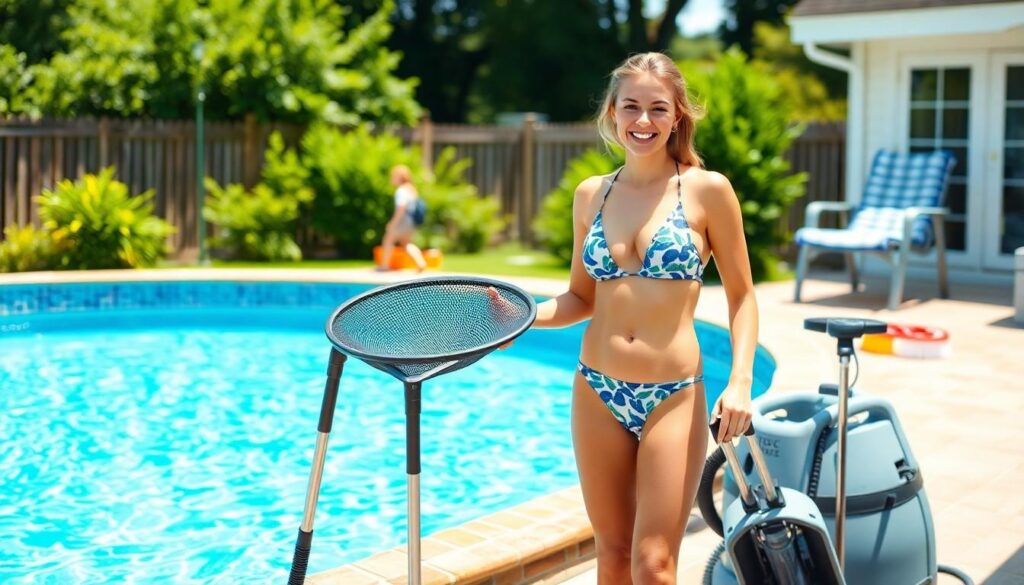
Maintaining an above-ground pool involves specific tasks that require attention. Consistent care prevents larger issues and keeps the water clean and inviting.
Regular Skimming and Cleaning
Skimming the surface daily removes leaves, bugs, and debris. Cleaning the walls and floor of the pool weekly prevents algae buildup. Using a pool brush helps maintain the liner’s integrity. Vacuuming the pool weekly keeps the bottom free from dirt and grime. Utilizing a skimmer net makes this task easier. Routine cleaning enhances the overall pool experience.
Checking Chemical Levels
Testing the water chemistry protects swimmers and maintains water clarity. pH levels should stay between 7.2 and 7.6 for optimal comfort. Chlorine levels need to be maintained between 1 and 3 parts per million for effective sanitation. Alkalinity should measure between 80 and 120 parts per million. Regular testing helps identify imbalances early and ensures a healthier pool environment. Adjusting chemical levels based on test results provides safe swimming conditions.
Advanced Maintenance Tips
Advanced maintenance techniques elevate above ground pool care. Focusing on specific systems and seasonal considerations enhances pool longevity.
Filtration System Maintenance
Filtration systems require routine upkeep for optimal performance. Clean or replace filter cartridges every 2-6 weeks, depending on usage and debris levels. Inspect pump baskets weekly, removing leaves and dirt to improve water flow. Backwashing sand filters every month ensures effective debris removal. Monitor pressure gauges; elevated readings indicate clogs that need attention. Regular maintenance prevents costly repairs and prolongs the lifespan of the equipment.
Seasonal Care for Above Ground Pools
Seasonal changes prompt different maintenance needs for above ground pools. Preparing the pool for winter involves balancing chemicals and covering it properly to prevent debris buildup. During spring, clean the cover and inspect equipment for wear. Maintaining balanced chemical levels throughout summer supports clear water and swimmer safety. Regularly check water levels, ensuring the skimmer remains submerged. Each season demands specific tasks to protect the pool from environmental factors and maintain clean, inviting water.
Common Problems and Solutions
Above ground pool maintenance can present specific challenges. Addressing these common issues promptly ensures a clean and enjoyable swimming experience.
Algae Issues
Algae can thrive in above ground pools, quickly turning the water cloudy. Regular cleaning prevents algae growth; skimming, brushing, and vacuuming the pool weekly are essential steps. Chlorine levels should remain between 1-3 ppm to inhibit algae. If algae blooms occur, shock the pool by adding a high dose of chlorine, followed by running the filter continuously. Common products for algae treatment include algaecides, which can further assist in control. Testing water for pH levels is also crucial; maintaining a pH between 7.2-7.6 supports chlorine effectiveness and overall water clarity.
Equipment Malfunctions
Malfunctions in pool equipment can disrupt maintenance routines. First, check the filter system regularly; if water doesn’t flow correctly, a clogged filter or malfunctioning pump may be the issue. Inspecting the skimmer basket weekly prevents debris buildup. Pump operation should run for 8-12 hours daily during peak swimming seasons. If the heater or chlorinator fails, check for blockages or electrical issues. Routine maintenance of equipment, such as cleaning cartridges every 2-6 weeks, can help avoid major breakdowns, ensuring systems run efficiently and water remains clear.
Maintaining an above ground pool doesn’t have to be daunting for beginners. With a solid understanding of essential components and regular upkeep, anyone can enjoy a clean and refreshing swimming experience. By following the outlined maintenance tasks and seasonal care tips, pool owners can ensure their pool remains in excellent condition throughout the year.
Addressing common challenges promptly and keeping an eye on chemical levels will lead to a safe and enjoyable environment for family and friends. Embracing these practices not only enhances the pool’s longevity but also maximizes the enjoyment it brings. With dedication and the right approach, anyone can master above ground pool maintenance.