As temperatures cool and daylight fades earlier, the patio doesn’t have to become forgotten square footage. Fall offers a unique opportunity to reconfigure outdoor spaces for a different kind of comfort, one that trades poolside lounging for fireside gatherings and swaps lightweight summer fabrics for layered warmth. With strategic changes to textiles, lighting, heating, and decor, a patio can become the most inviting room of the house well into November. This guide covers practical upgrades and design shifts that extend outdoor living through autumn without requiring a construction crew or a landscape architect.
Table of Contents
ToggleKey Takeaways
- Fall patio ideas should prioritize layered textiles, weather-resistant fabrics, and cozy seating to create comfort as temperatures drop below 60°F.
- Incorporate autumn colors through seasonal planters with mums and ornamental grasses, plus natural elements like branches, hay bales, and gourds arranged intentionally for visual impact.
- Install warm LED string lights and low-voltage landscape lighting to extend usability past 6 p.m., complemented by lanterns or solar path lights for ambient evening atmosphere.
- Add functional heat sources like propane patio heaters (40,000–48,000 BTUs), fire pits with proper clearances, or infrared electric heaters to shift patios from abandoned to actively used outdoor living spaces.
- Design a dedicated fall dining or entertaining zone with weatherproof tables, durable outdoor fabrics, and beverage stations that accommodate longer lingering conversations as daylight fades.
Create Warmth with Layered Textiles and Cozy Seating
Summer cushions won’t cut it when temperatures drop below 60°F. Swap lightweight cotton for weather-resistant outdoor fabrics in heavier weights, look for solution-dyed acrylic or polyester blends rated for outdoor use with at least 1,000 hours of UV resistance.
Add throw blankets in wool or fleece to seating areas. Store them in a weatherproof deck box or galvanized bin near the seating zone so they’re accessible but protected from morning dew. A 50-gallon deck box will hold 8–10 folded throws comfortably.
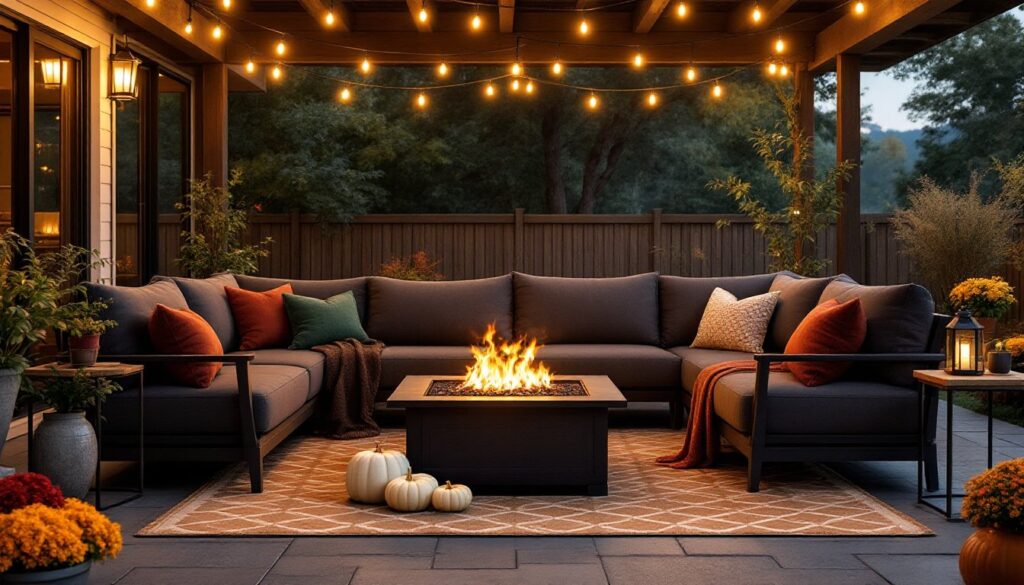
Consider swapping out or supplementing existing seating. Adirondack chairs and metal bistro sets feel cold in fall: deep-seating sectionals with thick cushions or wooden benches with added seat pads provide better insulation and comfort. If budget allows, a porch swing or hanging egg chair with a quilted cushion creates a cozy focal point.
Outdoor rugs anchor the seating area and add warmth underfoot. Choose polypropylene or PET (recycled plastic) rugs designed for outdoor use, they resist mold, dry quickly, and handle moisture better than jute or natural fiber options. An 8’x10′ rug works for most standard patio seating groups.
Pillows in darker, richer tones (rust, burgundy, forest green, charcoal) visually warm the space and hide dirt better than summer pastels. Use pillow inserts rated for outdoor use (quick-dry polyester fill) and choose covers with hidden zippers for easy removal and washing.
Embrace Autumn Colors Through Seasonal Decor
Fall’s color palette, burnt orange, deep red, gold, and chocolate brown, works naturally with most patio materials, from weathered wood to gray composite decking.
Planters and containers are the fastest way to introduce seasonal color. Swap out summer annuals for mums, ornamental kale, pansies, and asters, which tolerate light frost and provide color into late October or November depending on the region. For containers that last beyond first frost, design fall planters with evergreens and textural grasses.
Use gourds, pumpkins, and dried corn stalks as temporary decor elements, but anchor them visually. A cluster of three pumpkins in varying sizes looks intentional: a single pumpkin on a table looks like someone forgot it. Stack small pumpkins in galvanized tubs or arrange them along patio steps.
Wreaths aren’t just for doors. Hang a 24-inch preserved leaf or berry wreath on an exterior wall, pergola post, or fence section visible from the seating area. Preserved materials (glycerin-treated magnolia, eucalyptus, or beech) last longer than fresh and won’t drop leaves on the patio.
Avoid plastic or obviously artificial decor, it clashes with the natural, earthy tone fall patios should have. If using faux elements, choose high-quality replicas in natural materials like resin pumpkins with realistic texture or fabric-wrapped foam corn.
Add Ambient Lighting for Shorter Days
Daylight ends before 6 p.m. by mid-November in most of the U.S., so functional lighting becomes essential, not decorative.
String lights remain the most versatile option. Use LED bistro string lights with Edison-style bulbs (2200K–2700K color temperature) for warm, flattering light. Suspend them overhead using screw hooks installed into fascia boards, pergola beams, or fence posts. For masonry or stucco, use concrete anchors rated for outdoor use.
If no overhead structure exists, install 10-foot shepherd’s hooks at the corners of the patio and drape lights between them. Secure cords with UV-resistant cable ties to prevent sagging.
Solar path lights work well along patio edges or steps, but performance drops in fall due to shorter days and lower sun angles. For reliability, choose low-voltage LED landscape lighting (12V systems) with a transformer. A basic kit with six fixtures and a 60-watt transformer runs about $80–$120 and provides consistent illumination.
Lanterns and candle holders add layers of light. Use flameless LED candles in lanterns for safety and convenience, they won’t blow out in wind and don’t require supervision. For real flame ambiance, choose citronella candles in galvanized buckets for dual-purpose lighting and late-season insect control.
Install a dimmer switch on overhead porch lighting if the patio connects to a covered area. Dimmable light adjusts mood and reduces glare during evening gatherings.
Incorporate Natural Elements and Harvest Touches
Fall decor works best when it echoes the surrounding landscape rather than fighting it.
Collect branches, pinecones, and seed pods from the yard (or purchase bundles from craft stores) and arrange them in large urns, galvanized buckets, or ceramic planters. Birch branches or curly willow provide vertical interest: bittersweet vines add color and texture.
Hay bales serve as informal seating, side tables, or risers for planters. A standard two-string bale (14″x18″x36″) costs $5–$8 and lasts one season if kept dry. Cover the top with a burlap sack or outdoor cushion if using as seating to prevent straw from shedding onto clothes.
Create a centerpiece for an outdoor dining table using a wooden dough bowl or galvanized tray filled with mini pumpkins, pinecones, and battery-operated taper candles. Keep the arrangement low (under 10 inches) so it doesn’t block sightlines across the table.
Consider adding a small fire feature as both decor and function, see the next section for details. Visual warmth and actual warmth often overlap in fall patio design.
Rotate natural elements as the season progresses. Early fall leans on sunflowers and corn: mid-fall shifts to pumpkins and mums: late fall incorporates evergreen branches and berries.
Extend Your Patio Season with Heat Sources
Heat is the difference between a patio used in October and one abandoned after Labor Day.
Propane patio heaters (the freestanding mushroom-style models) generate 40,000–48,000 BTUs and warm a 15–20-foot diameter circle. They run on standard 20-pound propane tanks (the same used for gas grills), which provide 8–10 hours of heat per tank. Position heaters at least 3 feet away from walls, furniture, and overhead structures per manufacturer safety guidelines.
Fire pits create a gathering point and provide radiant heat. A basic 30-inch steel fire bowl costs $100–$200 and burns wood or (with a conversion kit) propane. Check local ordinances before installing or using a fire pit, some municipalities restrict open flames, require setbacks from structures, or ban them during dry conditions.
For built-in pits, maintain a 10-foot clearance from the house and a 3-foot clearance from combustible furniture or decking. Never place a wood-burning fire pit on composite decking or vinyl, use a fire-resistant pad or locate it on pavers, gravel, or concrete.
Tabletop fire features (gel fuel or propane models) add ambiance without major heat output, they’re decorative more than functional but provide a visual focal point for entertaining zones.
Infrared electric heaters work well for covered patios with nearby outlets. A 1500-watt wall-mounted unit heats approximately 150 square feet and costs $0.15–$0.20 per hour to operate (based on average U.S. electric rates). These require a dedicated 15-amp circuit and a weatherproof outlet.
Always keep a fire extinguisher rated for outdoor use (Class ABC) within 10 feet of any open flame or heat source.
Design a Fall Dining or Entertaining Zone
Outdoor dining shifts from casual to intentional in fall. Set up a dedicated zone that accommodates both meals and lingering conversations.
Use a weatherproof dining table large enough for your typical guest count, a 60-inch round seats six comfortably: a 72-inch rectangular table seats eight. If storage is tight, folding tables work, but choose commercial-grade models with powder-coated steel frames, not lightweight camping tables.
Add a tablecloth or table runner in a durable outdoor fabric. This protects the table surface and adds a layer of visual warmth. Weighted clips or tablecloth clamps prevent fabric from blowing off in wind.
Drinkware and servingware should be shatterproof, acrylic, melamine, or enamelware hold up better outdoors than ceramic or glass. Keep a beverage tub stocked with ice for drinks: a galvanized 20-quart tub handles a 12-pack plus ice.
Consider installing a drink rail or side shelf along patio railings if space is tight. A simple 1×6 cedar board mounted horizontally on L-brackets provides a ledge for glasses and small plates without taking up floor space.
If grilling is part of the plan, position the grill station 10 feet from the dining area (upwind if possible) to keep smoke and heat away from guests. A small prep cart with a stainless steel top keeps tools and ingredients handy.
Set up a s’mores bar or hot beverage station on a side table or rolling cart. Use an insulated beverage dispenser (3–5 gallons) for hot cider or cocoa, and keep toppings (marshmallows, cinnamon sticks, whipped cream) in airtight containers to prevent moisture.
Conclusion
Fall patio upgrades don’t require a full redesign, just strategic additions that address comfort, warmth, and the shift in how outdoor spaces get used. Focus on layered textiles, reliable heat sources, and lighting that extends usability past sunset. Most of these changes are reversible, portable, and scalable to both budget and skill level. The goal is function first, atmosphere second, and a space that actually gets used instead of admired through a window.