Designing a living space around both a fireplace and a TV doesn’t have to feel like an interior design standoff. These two focal points can coexist without one stealing the show or creating an awkward viewing experience. The challenge lies in balancing function with aesthetics, ensuring the TV sits at a comfortable height, the fireplace maintains its visual appeal, and the decor pulls the whole arrangement together. Whether mounting the screen above the mantel or positioning it side-by-side, thoughtful planning and strategic styling turn what could be a cluttered wall into a cohesive, inviting centerpiece.
Table of Contents
ToggleKey Takeaways
- Heat management is critical when mounting a TV above a fireplace—most TV manufacturers recommend a maximum ambient temperature of 100°F, so use heat deflectors or recessed alcoves with wood-burning units.
- Fireplace decor ideas with TV should prioritize ergonomic viewing height by keeping the screen’s center at eye level (roughly 42 inches from the floor), avoiding the common pitfall of placing it too high above traditional mantels.
- Side-by-side layouts or pull-down TV mounts work better than above-mantel mounting when ceiling height is limited, reducing neck strain and improving both function and comfort during extended viewing sessions.
- Balance visual weight on the mantel by anchoring with taller objects (18–24 inches) on outer edges while keeping the center low or empty, and avoid competing decor when a TV spans the mantel width.
- Dark accent walls in charcoal, navy, or forest green reduce glare and make the TV bezel disappear when off, while using digital art modes on Frame TVs integrates the black screen into your overall design aesthetic.
- Selecting a decor style—modern minimalist, transitional, rustic, or industrial—ensures your fireplace and TV combo feels intentional rather than cluttered, with clean cable management and unified color palettes pulling the arrangement together.
Why Combining a Fireplace and TV Works (and Common Challenges to Avoid)
Fireplaces and TVs both draw attention, which makes them natural competitors for wall space. Pairing them in one area consolidates visual interest and frees up other walls for furniture placement or windows. In open-concept homes, this combo anchors the living zone and defines seating arrangements without blocking sightlines.
Heat is the first pitfall. Direct-vent gas fireplaces and electric models produce less radiant heat than traditional wood-burners, making them safer choices when a TV sits above. If mounting above a wood-burning unit, install a full-width mantel (at least 6 inches deep) and consider a heat deflector or recessed alcove to redirect warmth. Most TV manufacturers specify maximum ambient temperatures around 100°F: prolonged exposure above that shortens component lifespan.
Viewing height is the second hurdle. Ergonomic guidelines recommend the center of the screen at seated eye level, roughly 42 inches from the floor. Fireplaces typically place a mantel around 50–60 inches up, pushing the TV center to 70 inches or higher. That forces viewers to tilt their heads back, causing neck strain during long sessions. If the mantel sits above 54 inches, a side-by-side layout or a pull-down TV mount may be more comfortable.
Glare and reflections complicate things further. Fireplace glass doors and polished stone surrounds bounce light onto the screen, especially during daylight. Matte or honed finishes on the hearth, plus blackout or solar shades, mitigate this. An anti-glare screen protector or repositioning lamps away from direct angles also helps.
Layout and Placement Strategies for Fireplaces with TVs
Mounting the TV Above the Fireplace
This is the most common approach when wall space is tight. Start by confirming the wall can support both the fireplace surround and a mount: masonry chimneys require masonry anchors rated for the TV’s weight, while framed walls need blocking behind the drywall. Use a stud finder to locate framing, and if the fireplace is a zero-clearance insert, check the manufacturer’s clearance specs, some prohibit penetrations within 12 inches of the firebox.
A full-motion or pull-down mount drops the screen 10–15 inches when in use, improving ergonomics. Look for mounts rated for the TV’s VESA pattern and wall type. Cable management matters: run power and HDMI lines through an in-wall conduit kit (not just a brush plate) to meet NEC Article 820 for low-voltage wiring. If the fireplace has a gas line or flue, hire an electrician to route cables safely around those penetrations.
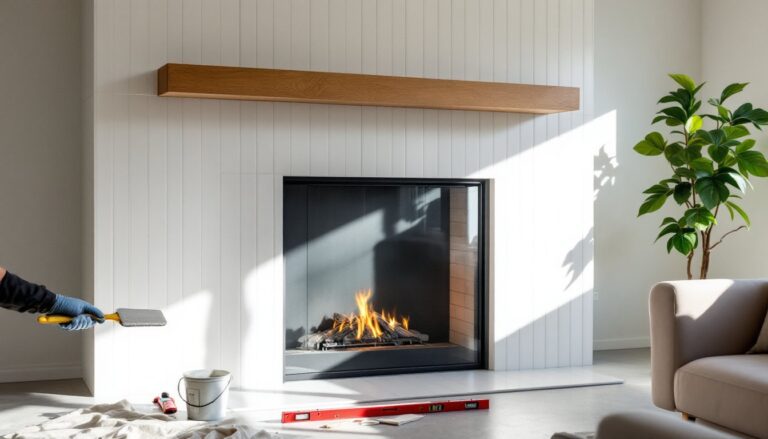
Frame the TV with built-in cabinetry or shiplap paneling to visually blend the screen into the wall. Painting the wall behind the TV a darker shade, charcoal, navy, or forest green, reduces glare and makes the bezel disappear when the screen is off. Keep the mantel minimal: one or two sculptural objects or a single piece of art flanking the TV prevents a cluttered look.
Side-by-Side Arrangements for Better Viewing
If ceiling height or neck strain is a concern, place the TV on an adjacent wall perpendicular to the fireplace. This works well in L-shaped rooms or spaces with a corner fireplace. Position seating to face both elements at an angle, using a sectional or swivel chairs to let viewers shift focus.
Another option: a media console positioned beside the fireplace on the same wall. This keeps the screen at proper eye level and creates symmetry. Use matching millwork or cabinetry to tie the fireplace surround and TV stand together. A linear electric fireplace installed below the TV in a shared floor-to-ceiling unit offers clean lines and eliminates the height conflict altogether.
For rooms with a traditional centered fireplace, mount the TV on a perpendicular wall and angle the fireplace seating zone slightly off-center. This breaks the formal symmetry but improves function. Add a low credenza or floating shelf below the TV to store components and balance the visual weight of the hearth.
Mantel Styling Ideas That Complement Your TV
A TV above the mantel can feel top-heavy if decor isn’t balanced. Anchor the composition with taller objects on the outer edges, a pair of 18–24-inch candlesticks, ceramic vases, or sculptural bookends, and keep the center low or empty. This frames the screen without competing for attention.
Layering adds depth without crowding. Lean a large mirror or piece of art against the wall behind smaller objects, or prop a rustic wood tray vertically to introduce texture. Greenery softens hard edges: trailing pothos or eucalyptus in a ceramic pot brings organic movement. Avoid faux florals that look dated: fresh stems or dried pampas grass age better.
Seasonal swaps keep the mantel fresh. In fall, a garland of faux oak leaves and mini pumpkins: in winter, a string of warm-white LEDs and pine sprigs. Swap out one or two accent pieces rather than overhauling the entire display. A curated approach to mantel styling prevents visual fatigue and makes quarterly updates manageable.
If the TV spans most of the mantel width, shift decor to the hearth or flanking built-ins. Stack three hardcover books on one side of the firebox, place a woven basket for throws on the other, and hang art or sconces on the chimney breast to either side of the TV. This distributes interest vertically and horizontally.
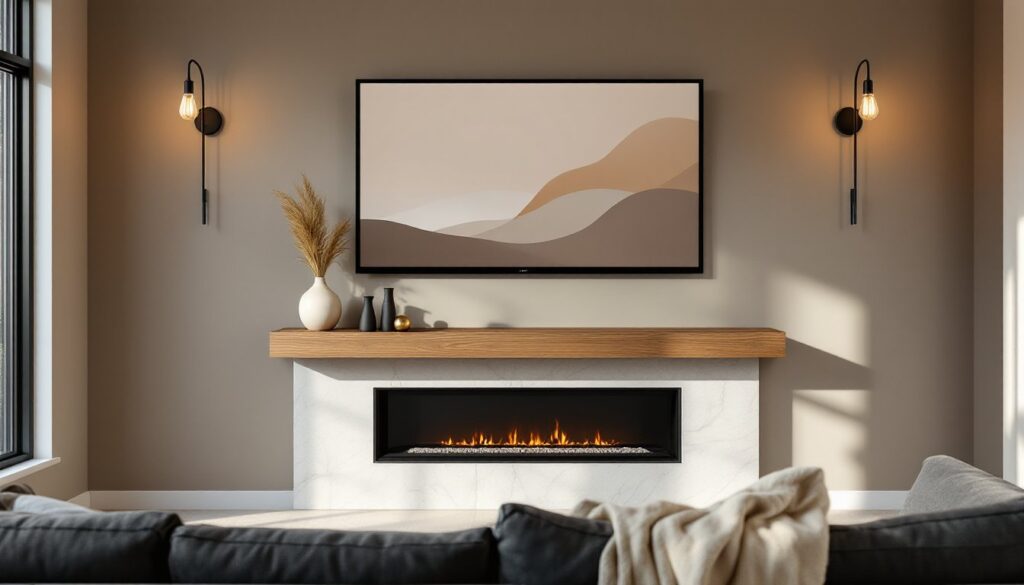
When the TV is off, a digital art mode or screensaver displaying a museum painting or abstract design integrates the black rectangle into the decor. Samsung Frame and LG Gallery models are built for this, but any smart TV can run a slideshow app. Pair it with a narrow floating shelf just below the screen to display a single sculptural piece, a marble sphere, brass sculpture, or ceramic bowl.
Choosing the Right Decor Style for Your Fireplace and TV Combo
Modern minimalist setups favor clean lines and a monochromatic palette. A linear gas fireplace with a concrete or honed-marble surround sits below a wall-mounted TV on a white or charcoal accent wall. Decor is sparse: one oversized vase, a single piece of abstract art, or a row of matte-black candleholders. Cable covers are concealed in the wall, and the mantel, if present, is a floating shelf in walnut or powder-coated steel.
Transitional styles blend traditional elements with contemporary simplicity. Think a white shaker-panel surround, shiplap or board-and-batten backdrop, and a TV framed by symmetrical sconces. The mantel holds a mix of textures: a ceramic pitcher, a small framed print, and a woven basket. Neutral tones, greige, soft taupe, warm white, keep the palette cohesive. This approach appears frequently in contemporary fireplace galleries for good reason: it’s approachable and adaptable.
Rustic or farmhouse designs lean into reclaimed wood mantels, stacked-stone surrounds, and vintage accents. A chunky beam mantel supports mason jars with wildflowers, a galvanized-metal tray, and a distressed wooden sign. The TV is mounted on shiplap painted in a muted sage or cream. Wrought-iron candle sconces or a wagon-wheel chandelier overhead reinforce the aesthetic. Keep the TV bezel black or buy a wood frame kit to disguise it.
Industrial interiors pair exposed brick or blackened steel fireplace surrounds with a wall-mounted TV on a raw concrete or dark-stained wood wall. Metal pipe shelving flanks the setup, holding books, plants, and Edison-bulb lamps. The mantel, often a thick steel plate or salvaged I-beam, displays minimal objects: a single succulent in a concrete planter or a trio of matte-black geometric sculptures.
Traditional rooms with ornate mantels and marble surrounds require restraint when adding a TV. Mount the screen in a recessed panel or custom millwork cabinet that can be closed when not in use. Flank the fireplace with built-in bookcases and use crown molding to tie the TV niche into the architecture. The mantel showcases classic symmetry: matching candlesticks, a central mirror or oil painting, and a pair of porcelain vases. For inspiration on blending classic details with modern tech, explore resources like Decoist’s design galleries, which balance heritage aesthetics with contemporary needs.
Color choices matter. Dark walls (charcoal, navy, forest green) make the TV disappear and highlight lighter decor. Light walls (white, cream, pale gray) brighten small rooms but risk making the TV a black hole when off, use a Frame TV or large art piece to counter that. An accent wall in wood paneling, stone veneer, or wallpaper behind the fireplace-TV combo adds depth without overwhelming the space.
Conclusion
Merging a fireplace and TV into one wall demands attention to heat, height, and visual weight, but the payoff is a living space that’s both functional and inviting. Whether mounting the screen above a minimal mantel or arranging a side-by-side layout with built-ins, thoughtful placement and restrained decor turn two competing focal points into a unified design feature. Keep sightlines clear, manage cables cleanly, and let the style, modern, transitional, or rustic, guide material and color choices for a setup that works as well as it looks.