Flagstone fire pits blend the rugged beauty of natural stone with the warmth of an outdoor gathering space. Unlike poured concrete or metal bowls, flagstone offers unique texture, color variation, and a built-to-last feel that improves with age. Whether a homeowner is aiming for a cozy corner nook or a full patio entertainment zone, flagstone adapts to nearly any backyard layout. This guide walks through 15 design ideas, from classic rounds to integrated patio setups, covering material choices, layout options, and practical installation tips that help DIYers and landscape planners alike create a fire feature that’s both functional and striking.
Table of Contents
ToggleKey Takeaways
- Flagstone fire pit ideas offer natural stone durability combined with unique textures and colors that weather gracefully while resisting cracking better than concrete or brick when properly installed.
- Round fire pits with 36- to 48-inch inside diameters provide optimal heat distribution and 360-degree seating, while square or rectangular designs fit tighter spaces and can integrate built-in seating walls.
- Proper foundation preparation—including 6 inches of compacted gravel, drainage considerations, and adherence to local fire codes—ensures your flagstone fire pit remains structurally sound for decades.
- Budget-friendly sourcing strategies like buying stone by the pallet, using landscape yard seconds, and skipping concrete footings in mild climates can reduce costs by 20–40 percent without compromising safety.
- Enhance your fire pit gathering space with strategic seating placement 4–6 feet from the pit edge, low-voltage LED lighting, windbreaks, and fire-resistant plantings for comfort and year-round enjoyment.
- Avoid water-absorbing stones like river rock, confirm your flagstone is rated for high-heat applications, and use regular masonry sand instead of polymeric sand within 12 inches of the fire ring to prevent heat damage.
Why Choose Flagstone for Your Fire Pit
Flagstone stands up to high heat without cracking when properly installed, making it a smart choice for fire pit construction. Most flagstone varieties, sandstone, limestone, and quartzite, tolerate temperature swings better than standard pavers or brick, provided there’s adequate drainage and a gravel base underneath.
The irregular shapes and natural color palette (grays, tans, reds, and blues) give each installation a one-of-a-kind look. No two pieces match exactly, so the finished pit feels custom rather than cookie-cutter. Thickness typically ranges from 1 to 2 inches for cap stones and 3 to 4 inches for structural pieces.
Flagstone also weathers gracefully. Over time, moss and lichen may add character to shaded edges, while sunny spots develop a weathered patina. This low-maintenance aging process appeals to homeowners who want a fire pit that looks better in year five than year one.
One caution: not all stone is fire-safe. Avoid river rock or any stone that may have absorbed water over time, these can explode when heated rapidly. Stick to quarried flagstone sold specifically for hardscaping, and confirm with the supplier that it’s rated for high-heat applications.
Classic Round Flagstone Fire Pit Designs
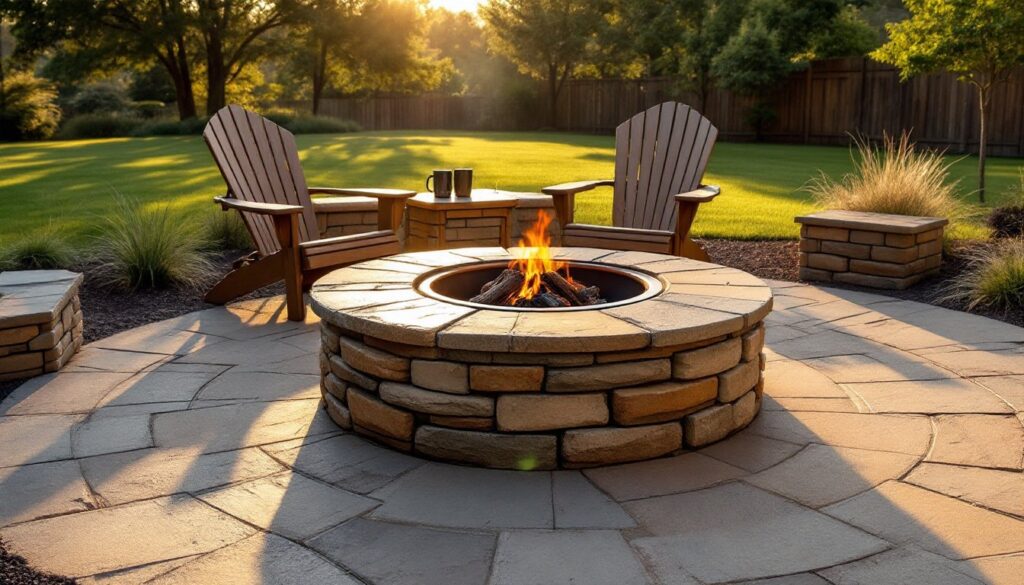
Round fire pits are the go-to for even heat distribution and 360-degree seating access. A 36- to 48-inch inside diameter works for most backyards, leaving room for a decent fire while keeping guests within conversation range.
Dry-stacked round pit: Layer flagstone pieces in a circular pattern without mortar, relying on gravity and careful fitting. Start with a compacted gravel base at least 6 inches deep, then build walls two to three courses high. Backfill the exterior with crushed stone for drainage. This method allows seasonal expansion and contraction without cracking.
Mortared round pit: For a more permanent structure, set flagstone in Type S mortar over a poured concrete footing (check local codes, some jurisdictions require footings below the frost line). Joints should be tooled smooth to shed water. This approach takes longer but delivers a finished look and wind resistance.
Fire ring insert: Drop a steel fire ring (30- to 36-inch diameter) inside the flagstone walls to protect the stone from direct flame contact and contain ash. Position the ring so the top edge sits flush with or slightly below the flagstone cap for a clean appearance.
Capstone finish: Top the pit walls with flat, broad flagstone pieces that overhang the interior by 1 to 2 inches. This cap provides a resting surface for drinks or skewers and hides the rough interior stonework. Select thicker cap pieces (2 inches minimum) to support occasional weight without cracking.
Square and Rectangular Flagstone Fire Pit Layouts
Square and rectangular pits fit tighter spaces and align neatly with existing patio grids or property lines. A 48-inch square or 36-by-60-inch rectangle offers ample fire area without dominating a small yard.
Cornerstone anchors: Use large, squared-off flagstone pieces at each corner to anchor the structure. These cornerstone blocks (often 6 to 8 inches thick) bear the most load and set the layout’s geometry. Measure diagonals before mortaring to confirm the layout is square.
Coursed vs. random pattern: Coursed patterns stack flagstone in uniform horizontal layers, creating clean lines and a modern aesthetic. Random patterns mix stone sizes and shapes for a more organic, cottage-garden feel. Both work structurally: choose based on the overall landscape style.
Built-in seating walls: Extend one or two sides of a rectangular pit into low seat walls (16 to 18 inches high, 16 to 20 inches deep). Cap these walls with smooth flagstone for comfortable perching. This integrated seating saves the cost and footprint of separate benches.
Access considerations: Leave at least one side open or lower for tending the fire and removing ash. A 12-inch gap on the windward side also improves draft and keeps smoke moving upward rather than pooling at ground level.
Flagstone Fire Pit Patio Combinations
Combining a fire pit with a flagstone patio creates a cohesive outdoor room. Planning both elements together ensures proper scale, drainage, and material flow.
Patio base prep: Excavate the patio area to a depth of 8 to 10 inches. Lay 4 to 6 inches of compacted crushed stone (¾-inch minus works well), then add 2 inches of coarse sand. Screed the sand level before setting flagstone. This sandwich drains water away from the fire pit foundation and prevents frost heave.
Integrated vs. island layout: An integrated layout embeds the fire pit directly into the patio surface, with flagstone radiating outward from the pit walls. This method uses less total stone and creates a unified look. An island layout places the pit at the center of a separate flagstone circle or square, surrounded by lawn or gravel, useful when the homeowner wants to move or remove the pit later without tearing up the entire patio.
Joint treatment: For patios, polymeric sand swept into joints (½ to 1 inch wide) locks flagstone in place and resists weed growth. Around the fire pit itself, skip polymeric sand within 12 inches of the fire ring, as high heat can cause it to harden into a brittle crust. Use regular masonry sand in the hot zone and refresh it annually.
Transition zones: Where patio stone meets lawn or planting beds, install a steel or aluminum edge restraint to prevent migration. Pound stakes every 18 to 24 inches and bend the edging to follow curves. This small detail keeps the patio looking sharp for years and simplifies mowing. For those seeking additional outdoor living inspiration, exploring integrated landscape features can elevate the overall design.
Budget-Friendly DIY Flagstone Fire Pit Ideas
Flagstone costs vary widely, $200 to $600 per ton depending on type, thickness, and region, but smart sourcing and simplified designs keep projects affordable.
Pallet or bulk stone: Buying stone by the pallet (typically 1 to 2 tons) rather than hand-selecting individual pieces cuts costs by 20 to 40 percent. Expect some waste, but the savings offset the extra material. A dry-stacked 48-inch round pit usually requires 1.5 to 2 tons of stone.
Local quarries and landscape yards: Skip big-box stores and source directly from regional quarries or landscape supply yards. Local stone often costs less and weathers to match the surrounding environment. Some yards sell “seconds”, pieces with minor chips or irregular thickness, at steep discounts. These work fine for fire pit walls where perfect uniformity isn’t critical.
Simplified shapes: Stick to basic rounds or squares. Complex curves, spirals, or multi-level designs demand more cutting and fitting, which means more time, more waste, and potentially renting a wet tile saw with a diamond blade ($50 to $75 per day). A simple design can be completed in a long weekend with a hammer and chisel for minor adjustments.
Skip the concrete footing: In mild climates or well-drained soils, a dry-stacked pit on a deep gravel base can be perfectly stable without a poured footing. This saves the cost of concrete, rebar, and formwork. Consult local codes first, some areas mandate footings for any permanent structure.
DIY fire ring: Instead of buying a prefab steel ring, fabricate one from 36-inch diameter galvanized culvert pipe (about $40 from farm supply stores). Cut it to 12 inches high with a reciprocating saw, smooth the edges with a file, and drill ½-inch drainage holes every 6 inches around the bottom. Many rustic fire pit ideas showcase creative repurposing of farm materials for backyard projects.
Enhancing Your Flagstone Fire Pit with Seating and Lighting
A fire pit is only as good as the space around it. Thoughtful seating and lighting turn a simple stone ring into a year-round gathering spot.
Seating distance and materials: Position permanent seating 4 to 6 feet from the pit edge, close enough for warmth, far enough to avoid sparks. Flagstone benches, Adirondack chairs, or built-in masonry seat walls all work. If using wood furniture, treat it with a fire-retardant stain and keep cushions stored when the fire’s burning.
Ambient and task lighting: Low-voltage LED path lights (12-volt systems are DIY-friendly and code-compliant in most areas) along walkways guide guests safely after dark. Uplighting placed behind the fire pit highlights the flagstone texture without glare. For task lighting near the fire, consider a wall-mounted solar spotlight on a nearby fence or post, no trenching required.
String lights and overhead features: If the pit sits under a pergola or arbor, outdoor-rated string lights (Edison bulbs are popular) create a warm canopy effect. Hang them at least 8 feet above grade to keep them away from rising heat and ensure headroom. Use galvanized or stainless steel cable and turnbuckles for a taut, professional look.
Safety and code notes: Any outdoor electrical work should follow NEC Article 680 (outdoor installation) guidelines. Use GFCI-protected outlets, weatherproof boxes, and UV-rated cable. If running new circuits, hire a licensed electrician or pull a permit and have the work inspected. For more detailed guidance on outdoor improvements and lighting placement, homeowners can find step-by-step breakdowns that cover both aesthetics and safety.
Windbreaks and plantings: A low flagstone wall, dense shrub border, or decorative screen on the windward side reduces smoke drift and makes the space more comfortable on breezy evenings. Choose fire-resistant plants, lavender, sage, or ornamental grasses, and keep them at least 10 feet from the pit if they’re highly flammable species like junipers.
Conclusion
Flagstone fire pits combine durability, natural beauty, and design flexibility that few other materials match. Whether a homeowner tackles a simple dry-stacked round on a weekend or plans a full patio-and-seating integration, starting with a solid base, sourcing quality stone, and respecting local codes ensures a feature that will anchor backyard gatherings for decades. The key is to plan for drainage, choose fire-safe materials, and scale the project to fit both budget and skill level.