Turning a bedroom into a forest-inspired retreat isn’t about slapping tree decals on the wall and calling it done. It’s about layering color, texture, and materials to evoke the calm, restorative quality of being surrounded by nature, without the bugs or unpredictable weather. A well-executed forest bedroom balances visual interest with restraint, using natural tones, organic textures, and thoughtful details that don’t tip into kitsch. Whether someone’s working with a cramped studio or a spacious primary suite, the same principles apply: start with a cohesive palette, choose materials that reference the outdoors, and build depth through layering.
Table of Contents
ToggleKey Takeaways
- Forest bedroom ideas rely on layering natural colors, textures, and materials like wood, rattan, and linen to evoke a woodland sanctuary without overwhelming the space.
- A cohesive three- to five-color palette incorporating moss green, warm browns, charcoal, and muted tones creates a calm, restorative environment based on actual forest color gradients.
- Foundation elements like paint, shiplap, or peel-and-stick wallpaper should be installed first, with furniture and accessories added in layers to build depth and visual interest.
- Natural materials such as FSC-certified solid wood, linen curtains, wool rugs, and live-edge furniture reinforce the biophilic design principle that nature reduces stress and improves sleep quality.
- Lighting should mimic dappled sunlight through dimmers, warm-toned Edison bulbs, table lamps, and string lights rather than relying on harsh overhead fixtures.
- A forest bedroom design is flexible and adaptable to trends, making it a smart long-term investment that works for renters and homeowners in urban or suburban settings.
Why Choose a Forest-Themed Bedroom?
Forest-themed bedrooms tap into biophilic design, the concept that humans have an innate connection to nature. Studies show that exposure to natural elements, even representations of them, can reduce stress, improve sleep quality, and enhance overall well-being. A bedroom designed around woodland aesthetics creates a sanctuary that promotes relaxation after a long day.
This approach works especially well in urban or suburban settings where access to green space is limited. By bringing forest elements indoors, homeowners can simulate the restorative effects of a walk through the woods without leaving home. It’s practical, too: forest palettes tend to be forgiving with wear and adaptable to changing trends, making them a smart long-term investment.
Unlike more aggressive design trends that date quickly, a forest bedroom can evolve. Start with foundational elements like paint and flooring, then adjust accessories and textiles as tastes shift. The flexibility makes it accessible for renters and owners alike.
Essential Color Palettes for a Forest Bedroom
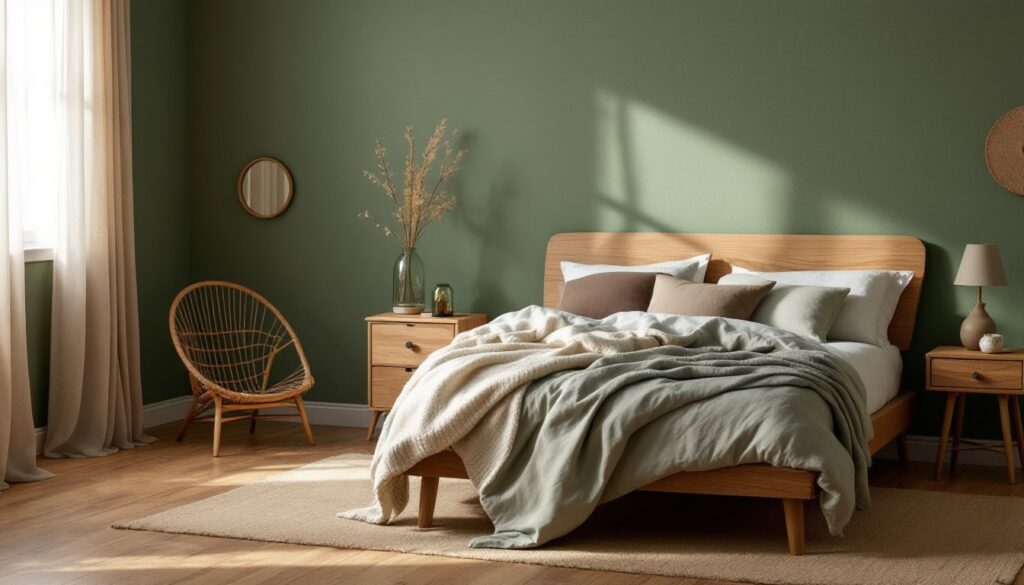
The backbone of any forest bedroom is the color palette, and it should reflect the layered tones found in actual woodlands. Think beyond basic green. Real forests contain gradients: deep moss, muted sage, charcoal bark, warm taupe, and the occasional surprise of mushroom cream or lichen gray.
For walls, Benjamin Moore’s Caldwell Green or Sherwin-Williams’ Evergreens are solid starting points, neither skews too bright or too murky. If painting all four walls feels heavy, consider a single accent wall behind the bed. A darker shade like Sherwin-Williams’ Pewter Green can ground the space without overwhelming it. Ceilings can handle a whisper of color too: a pale, warm gray (not stark white) softens overhead light and adds cohesion.
Secondary colors matter. Forest floors aren’t monochromatic. Introduce warm browns, burnt sienna, and soft ochres through furniture and accents. Avoid pure black, it reads harsh against organic tones. Instead, opt for charcoal or deep walnut stains that mimic shadowed bark. The key is restraint: too many competing hues destroy the calm. Stick to a three- to five-color core and let natural material variation do the rest.
Nature-Inspired Furniture and Materials
Furniture choices should reinforce the connection to the outdoors, prioritizing natural materials over synthetics. Solid wood frames, oak, walnut, or reclaimed pine, are the obvious picks, but quality matters. Veneer can work if the substrate is solid and the finish isn’t overly glossy: you want the grain visible, not buried under polyurethane.
Live-edge furniture brings literal forest elements into the room. A live-edge headboard or nightstand retains the organic contour of the tree, celebrating imperfection. If budget’s tight, a single statement piece, like a bench at the foot of the bed, can carry the concept without requiring a full furniture overhaul. When shopping, check for FSC-certified wood to ensure sustainable sourcing.
Rattan, wicker, and cane add textural variety without competing with wood. A rattan chair or woven pendant light introduces a lighter, airier counterpoint to heavier wooden pieces. Just avoid the matchy-matchy trap, mixing wood tones and weave styles keeps the room from feeling like a showroom display.
Metal can work in small doses. Matte black or oil-rubbed bronze hardware on dressers and lamps nods to wrought iron without clashing. Skip chrome and polished nickel: they’re too clinical for this aesthetic. If someone’s incorporating upholstered furniture, choose frames with exposed wood legs to maintain visual continuity.
Wall Treatments That Bring the Outdoors In
Wall treatments set the tone faster than any other element, and there are multiple paths depending on skill level and budget. Paint’s the simplest: one or two coats of a quality acrylic-latex interior paint (look for low-VOC options like Behr Premium Plus or Benjamin Moore Natura) over primed drywall. Coverage is typically 350–400 square feet per gallon, so measure twice, buy once.
Peel-and-stick wallpaper has come a long way and offers a renter-friendly route to pattern. Forest murals, think birch groves, fern prints, or topographic maps, are widely available. Application is straightforward: clean the wall, measure and cut panels, smooth from center outward with a plastic squeegee to avoid bubbles. Removal’s clean if done carefully. That said, traditional paste-the-wall or paste-the-paper wallpaper has better longevity and a more authentic texture, especially in designs mimicking wood grain or stone.
For those comfortable with power tools, a shiplap or tongue-and-groove accent wall adds dimension. Use 1×6 pine boards (actual dimensions: 3/4″ x 5.5″) and install horizontally with a pneumatic brad nailer or finishing nails. Locate studs with a stud finder and fasten every 16 inches on-center. Paint or stain before install to save time. This is a weekend project for someone with moderate carpentry skills.
Board-and-batten is another option, historically used on exteriors but increasingly popular indoors. It’s more involved, requires cutting, spacing, and caulking, but the vertical lines add height to a room. Either treatment benefits from a miter saw for clean cuts, though a circular saw and speed square will get the job done with patience.
Layering Textures and Textiles for a Cozy Forest Feel
Texture is what separates a forest bedroom from a green bedroom. Forests are tactile, rough bark, soft moss, cool stone, and textiles should echo that variety. Start with the bed, the room’s focal point. A linen duvet cover in moss, olive, or natural beige offers a matte, slightly rumpled look that feels organic. Avoid overly crisp percale: it’s too formal here.
Layer with throws and accent pillows in mixed materials: chunky knit wool, faux fur (if ethically sourced), cotton waffle weave, or even a lightweight hemp blend. The goal is visual and tactile interest without clutter. Stick to three or four pillows max, this isn’t a hotel.
For window treatments, linen or cotton curtains in neutral tones filter light softly and reinforce the natural vibe. If privacy’s a concern, layer with bamboo or matchstick roller shades underneath. Installation’s simple: mount brackets 4–6 inches above the window frame and extend rods 3–4 inches beyond each side to maximize light when curtains are open. Use a level to avoid crooked lines.
Underfoot, area rugs define space and add warmth. Jute, sisal, or wool rugs in earthy tones work well, though jute sheds initially and sisal can feel scratchy. A low-pile wool rug in a muted pattern (think subtle stripes or geometric shapes in forest hues) balances comfort and durability. Rug pads are non-negotiable on hardwood or tile, they prevent slipping and extend rug life. Trim pads 1 inch smaller than the rug on all sides for a clean edge.
Lighting and Accessories to Complete Your Woodland Sanctuary
Lighting in a forest bedroom should mimic dappled sunlight, layered, warm, and adjustable. Overhead fixtures matter less than task and ambient lighting. A dimmer switch (requires basic electrical knowledge or a licensed electrician if unfamiliar with wiring) on existing overhead lights allows flexibility. Standard residential dimmers work with most LED and incandescent bulbs, but check compatibility with CFLs.
Table lamps with linen or burlap shades on nightstands provide soft, directional light for reading. Bases in ceramic, wood, or stone keep the natural theme intact. Edison-style LED bulbs (warm white, around 2700K) in exposed-bulb fixtures add a subtle vintage touch without the energy waste of true incandescent bulbs.
String lights or fairy lights aren’t just for dorms, draped over a headboard or woven through a wall-mounted branch, they create a gentle glow reminiscent of fireflies. Battery-operated versions skip the outlet hunt, though plug-in models are more reliable for nightly use.
Accessories should be intentional, not abundant. A few well-chosen pieces, dried branches in a floor vase, a terrarium on a dresser, or framed botanical prints, anchor the theme. Real plants are ideal if light allows: pothos, snake plants, or ferns tolerate indoor conditions and improve air quality. For low-light rooms, high-quality faux plants (silk or plastic that doesn’t look cheap) are acceptable fallbacks.
Mirrors can reflect natural light and expand smaller rooms, but choose frames in wood or metal finishes that align with the palette. Avoid ornate gilt, it clashes. A simple round or rectangular mirror with a dark wood frame does the job without distraction.
Conclusion
A forest bedroom isn’t a one-weekend miracle. It’s built in layers, paint first, then furniture, then the details that make it feel lived-in rather than staged. The best versions balance intentionality with restraint, using natural materials and muted tones to create a space that’s genuinely restful, not just Instagram-ready. Start with one or two foundational changes and build from there.