Most homeowners enter their house through the garage more often than the front door. That makes the garage entryway one of the hardest-working spaces in the home, and one of the most neglected. Between muddy boots, grocery bags, backpacks, and seasonal gear, this transition zone quickly becomes a dumping ground. But with a few strategic upgrades, it can become a functional, organized mudroom that actually makes daily life easier. This guide walks through practical improvements that address storage, durability, and usability without requiring a full renovation or contractor-level skills.
Table of Contents
ToggleKey Takeaways
- Garage entryway ideas should prioritize vertical storage solutions like slatwall panels and wall-mounted hooks to keep high-traffic floors clear and organized.
- Choose moisture-resistant flooring such as luxury vinyl plank or non-slip tile with proper waterproofing and sealed PVC baseboards to prevent damage in this demanding transition zone.
- Install at least 800 lumens of LED ceiling lighting and add task lighting near storage areas for safety, especially when carrying groceries or seasonal items.
- Build or install a bench with under-seat storage, positioned 36 inches away from doorways to maintain building code egress clearance and accommodate wet shoes.
- Apply light-colored, semi-gloss paint and add a framed mirror to enhance brightness and perceived space while making the entryway easier to clean and maintain.
- Add a recessed door mat or boot tray at the entry threshold to trap dirt before it spreads into the main house, reducing overall maintenance needs.
Why Your Garage Entryway Deserves Attention
The garage entry handles more daily traffic than any other threshold in most homes. Families haul in groceries, kids drop sports equipment, and wet coats pile up after rainstorms. Unlike a formal foyer, this space needs to absorb mess and chaos while keeping the rest of the house clean.
From a building perspective, this zone often sits on a concrete slab with minimal insulation and no climate control. That means temperature swings, moisture infiltration, and dirt tracked in from the garage floor. Addressing these issues upfront, before adding décor, prevents wasted effort and material damage down the line.
Functional design here also impacts home value. Buyers notice organized mudroom setups and durable finishes in high-traffic areas. According to design professionals at MyDomaine, well-executed entryway storage ranks high on buyer wish lists, especially in suburban markets where garage access is the primary entry point.
Finally, safety matters. Clutter near doorways creates trip hazards, and inadequate lighting increases fall risk when carrying armloads of groceries. Building codes (IRC Section R311.3) require adequate egress clearance, so stacked shoes and bins can’t block the path to the main house or exterior door.
Smart Storage Solutions for High-Traffic Areas
Storage is the backbone of any functional garage entryway. Without designated spots for coats, shoes, bags, and keys, items end up on the floor or countertop.
Wall-Mounted Organization Systems
Slatwall panels or pegboard offer maximum flexibility. These systems mount directly to wall studs (locate with a stud finder: standard spacing is 16 inches on center) and accept a variety of hooks, baskets, and shelves. Slatwall is more durable than pegboard and handles heavier loads, useful for hanging tool bags or sports equipment.
Install panels at least 48 inches high to keep frequently used hooks within reach for adults and older kids. Use 3-inch exterior-grade screws into studs for secure mounting. Leave a ½-inch gap behind the panel using furring strips if mounting over drywall: this allows hook insertion.
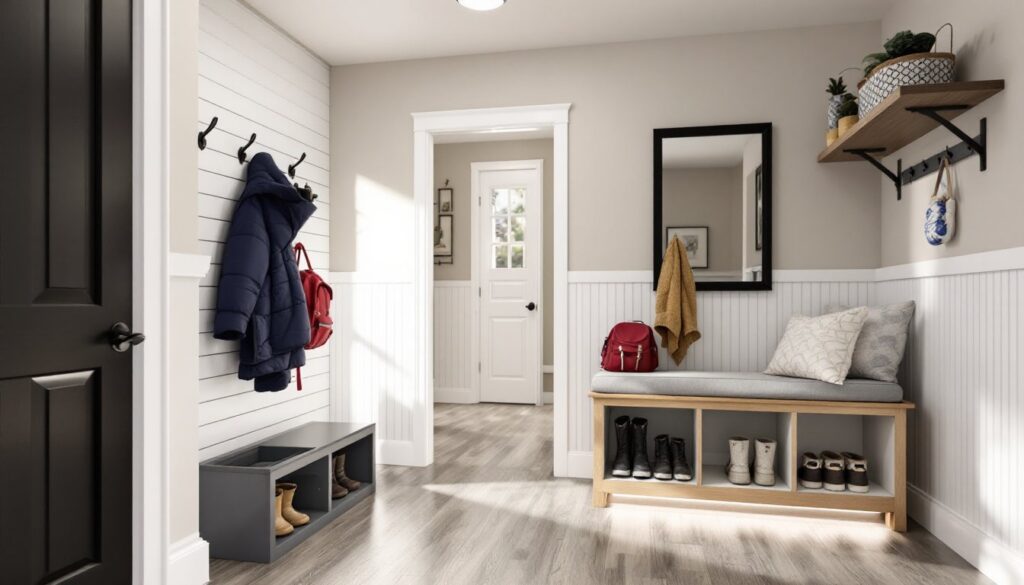
Coat hooks should be heavy-duty steel or cast iron, rated for at least 10 pounds each. Position them 60 inches from the floor for adults, with a second row at 42 inches for kids. Space hooks 6 to 8 inches apart to prevent coat crowding.
For small items like keys, sunglasses, and dog leashes, add a mail organizer or shallow basket shelf. Magnetic key holders work well on metal slatwall panels. Avoid plastic organizers in unheated entryways, they crack in cold weather.
Bench Seating With Built-In Storage
A bench simplifies shoe changes and provides hidden storage underneath. For a DIY build, use ¾-inch plywood for the frame and top, reinforced with 2×4 framing underneath for support. Standard bench height is 18 inches: depth should be at least 15 inches for comfortable seating.
If building from scratch feels like too much, ready-made storage benches are available in various materials. Look for units with lift-top lids rather than drawers, they’re easier to access when arms are full. For entryways that see wet shoes and snow, choose benches with slatted tops or removable cushions that can air out.
Position the bench along a side wall, not directly in the traffic path. Leave at least 36 inches of clearance in front for safe passage (per IRC R311 egress requirements). If the garage door swings into this space, measure the door arc and keep the bench outside that zone.
Add cubby dividers inside the bench to separate shoes by family member. Line the interior with sheet vinyl or a plastic boot tray to catch moisture and dirt. For families converting their garage space for multiple uses, integrating seating with garage gym storage can maximize square footage.
Flooring and Mudroom Essentials
The transition from garage to house often involves a step up (code requires a 4-inch minimum rise when entering from a garage to prevent carbon monoxide infiltration). That small landing area takes a beating from foot traffic, wet shoes, and dropped bags.
Luxury vinyl plank (LVP) or tile are the best flooring choices here. Both handle moisture, resist staining, and clean easily. LVP installs as a floating floor over existing concrete or plywood subfloor, no mortar or grout needed. Look for products rated for commercial use (wear layer of at least 20 mil) to handle the abuse.
Ceramic or porcelain tile is more durable but requires proper substrate prep. If installing over concrete, ensure the slab is level (within ⅛ inch over 10 feet) and use a crack-isolation membrane underneath to prevent tile fractures from slab movement. Use non-slip tile with a matte finish or textured surface, polished tile becomes dangerously slick when wet.
Install a recessed door mat or boot tray directly inside the entry. Recessed mats sit flush with the floor (no trip hazard) and trap more dirt than surface mats. Standard size is 24 x 36 inches, but custom sizes can be cut to fit the space. For a cleaner look similar to entryway design seen in contemporary porch layouts, consider a tray that complements your interior palette.
If the landing is small (less than 3 feet square), skip the rug and rely on durable, easy-clean flooring instead. Add a wall-mounted boot rack to keep wet footwear off the floor entirely.
Baseboard protection matters in mudrooms. Standard MDF baseboards swell and disintegrate when exposed to moisture. Use PVC or tile baseboards instead, or run the floor tile 4 to 6 inches up the wall as a tile baseboard. Seal all edges with 100% silicone caulk (not latex) to prevent water infiltration behind the wall.
Lighting and Aesthetic Upgrades That Make a Difference
Garage entryways are often dimly lit, making it hard to find keys or spot tripping hazards. Proper lighting is a safety issue, not just décor.
Install a ceiling-mounted LED fixture with at least 800 lumens (equivalent to a 60-watt incandescent bulb). For spaces under 50 square feet, one fixture is adequate: larger areas need two. If replacing an existing light, turn off the circuit breaker and confirm power is off with a non-contact voltage tester before touching any wiring.
For entryways without existing electrical boxes, battery-operated LED puck lights or plug-in wall sconces offer quick solutions without running new wiring. Motion-sensor models add convenience when hands are full.
Task lighting near hooks and benches improves usability. A small LED strip light under a wall-mounted shelf illuminates the bench area without glare. These run on low-voltage DC power and can be hardwired to a wall switch or plugged into an outlet.
Paint color affects perceived brightness. Use satin or semi-gloss paint in light neutrals (white, pale gray, beige) to reflect more light. Semi-gloss is easier to wipe clean than flat paint, critical in a space that sees dirty hands and scuff marks. Many designers featured on Decoist recommend testing paint samples in the actual space, as garage lighting (often cool-toned fluorescent) shifts color perception.
If the wall between garage and house is drywall, consider adding a half-wall of beadboard paneling or shiplap from floor to 36 to 48 inches high. This protects the wall from dings and scratches and adds visual interest. Install with panel adhesive and finish nails, then paint with semi-gloss trim paint.
For a finished look, add a mirror near the exit. A 24 x 36-inch framed mirror gives a last look before heading out and visually enlarges a small space. Mount it with heavy-duty picture hangers or French cleats rated for the mirror’s weight, standard drywall anchors aren’t sufficient.
Safety note: If painting or installing materials that generate dust, wear a dust mask (N95 or better) and safety glasses. Ensure adequate ventilation, especially if working in an attached garage where fumes can migrate into living spaces.
Conclusion
A functional garage entryway doesn’t require a major remodel, just smart use of vertical space, durable materials, and honest attention to how the space actually gets used. Prioritize storage that keeps floors clear, flooring that handles moisture without constant maintenance, and lighting that makes the space safe after dark. These improvements pay off every single day, turning a chaotic dumping ground into a space that works as hard as the people using it.