A hallway table sits in one of the most overlooked yet high-traffic areas of any home. It’s the first thing guests see when they walk through the door, and it’s often the last surface homeowners grab keys from on their way out. Even though its prime real estate, many entryway tables end up cluttered with mail, forgotten receipts, and random items that don’t have a designated spot. With a few deliberate choices, table selection, layering, storage integration, and seasonal styling, homeowners can turn this functional surface into a welcoming focal point that sets the tone for the entire home.
Table of Contents
ToggleKey Takeaways
- Choose a hallway table that measures 30 to 48 inches in length and 10 to 16 inches deep, maintaining at least 36 inches of clearance for foot traffic in your entryway.
- Layer decor elements using three height tiers (low, medium, tall) combined with mixed textures to create visual interest while leaving 30 to 40 percent of the table surface empty for functionality.
- Incorporate functional storage like baskets beneath the table, drawer consoles for hidden items, and decorative hooks above to keep your hallway organized and clutter-free.
- Hang a mirror or artwork centered 57 to 60 inches from the floor, with width proportioned to two-thirds or three-quarters of the table’s width for balanced visual impact.
- Update your hallway table decor seasonally by swapping accent pieces while keeping core items consistent, ensuring the entryway stays fresh without major redesign.
- DIY projects like painting thrifted tables, building custom consoles, or repurposing glass jars deliver styled hallway table looks for $10 to $60 without designer costs.
Choose the Right Hallway Table for Your Space
Before hanging artwork or arranging decorative objects, the foundation matters. The table itself needs to fit both the physical dimensions of the hallway and the aesthetic of the home.
Measure the hallway width and leave at least 36 inches of clearance for foot traffic. Most hallway tables range from 10 to 16 inches deep, any deeper and they’ll feel intrusive in a narrow space. Length depends on wall span, but 30 to 48 inches works for most entryways.
Material choice sets the style direction. A solid wood console with tapered legs suits traditional or farmhouse interiors, while a metal frame with a glass top feels modern and airy. Reclaimed wood adds texture and warmth, and painted MDF keeps costs down without sacrificing visual impact.
Height matters for proportion. Standard console tables sit at 30 to 36 inches tall, aligning well with most wall art and mirrors. If the ceiling height is 9 feet or more, a taller table (closer to 36 inches) balances the vertical space better. Shorter ceilings pair well with tables on the lower end of that range.
For tight budgets, a wall-mounted shelf at console height delivers the same effect without floor space. Use L-brackets rated for at least 50 pounds if adding heavy decor or storage bins.
Layer Decor Elements for Visual Interest
Layering creates depth and prevents the table from looking flat or sterile. Start with a foundational piece, a table runner, a tray, or a low horizontal object like a stack of hardcover books.
A tray (wood, metal, or woven) corrals smaller items and makes rearranging effortless. Choose one that’s 12 to 18 inches wide for a standard console. Place it off-center rather than dead middle for a more organic look.
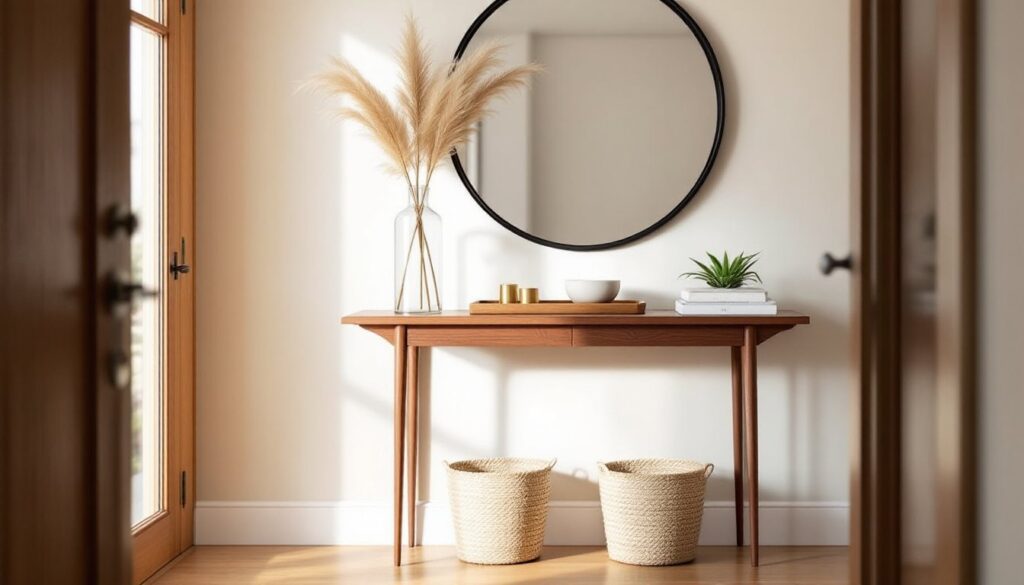
Next, add height variation. Use objects in three tiers: low (under 6 inches), medium (8 to 12 inches), and tall (14+ inches). A ceramic bowl or succulent planter works as the low element. A ceramic vase or sculptural candlestick covers the mid-range. A tall vase with dried pampas grass, eucalyptus stems, or branches hits the upper tier.
Texture is just as important as height. Mix smooth surfaces (glass, polished metal) with rough ones (woven baskets, unglazed pottery, natural wood). The contrast keeps the eye moving without adding visual clutter.
Avoid symmetry unless going for a formal, traditional look. Asymmetrical groupings, odd numbers work best, feel more relaxed and curated. Place a tall vase on one side, a stack of books with a small object on top in the center, and a low bowl on the opposite end.
Leave 30 to 40 percent of the table surface empty. Negative space prevents the arrangement from feeling crowded and gives room for keys, sunglasses, or packages.
Incorporate Functional Storage Solutions
A hallway table should work as hard as it looks good. Storage keeps everyday clutter from piling up and makes the space more functional for daily routines.
Baskets are the easiest storage add. Slide woven baskets or fabric bins underneath the table to hold shoes, dog leashes, reusable shopping bags, or scarves. Choose baskets that are 8 to 12 inches tall so they don’t block the table legs visually. Label them with small tags if multiple household members use them.
If the table has a lower shelf, use it for shallow bins, a stack of seasonal decor, or a small bench cushion that doubles as a seat for putting on shoes. Keep the shelf less dense than the tabletop to maintain visual balance.
Drawer consoles hide mail, pens, charging cables, and small tools. If building or modifying a table, add a shallow drawer (3 to 5 inches deep) with a simple pull. Even a single drawer adds significant utility without adding bulk.
Wall-mounted hooks above the table handle coats, hats, and bags. Install a row of three to five hooks spaced 4 to 6 inches apart, mounted into wall studs or using heavy-duty drywall anchors rated for at least 20 pounds each. Decorative hooks in brass, matte black, or wood finish tie into the table style.
A small catch-all dish or tray on the table surface keeps keys, wallets, and pocket change from scattering. Choose one in ceramic, leather, or metal that complements the other materials on the table.
Add Personality with Artwork and Mirrors
What hangs above the table has as much impact as what sits on it. The right piece anchors the entire vignette and pulls the eye upward.
Mirrors are the most popular choice for hallway tables, and for good reason. They reflect light, make narrow spaces feel wider, and provide a last-minute appearance check before leaving. Hang the mirror so its center sits at 57 to 60 inches from the floor, standard gallery height. The mirror width should be two-thirds to three-quarters the width of the table below it for balanced proportion.
Round mirrors soften angular spaces and pair well with modern or eclectic decor. Rectangular mirrors suit traditional settings, and arched mirrors bring in architectural interest that works across multiple styles.
Framed artwork is another strong option. A single large piece (24 by 36 inches or larger) makes a bold statement. A gallery wall of smaller frames (5 by 7, 8 by 10, 11 by 14) adds personality but requires more planning. Use painter’s tape to mock up the layout on the wall before hammering nails. Keep the bottom edge of the lowest frame 6 to 8 inches above the tabletop.
When selecting art, consider the home’s existing palette. Interior design experts often recommend pulling one or two accent colors from nearby rooms to create visual flow.
Wall-mounted shelves flanking the table create symmetry and add space for small plants, books, or decorative objects. Install them at varying heights for a less rigid composition.
Style Your Table for Different Seasons
Seasonal swaps keep the entryway feeling fresh without a full redesign. A few targeted changes signal the shift in months and make the home feel thoughtfully maintained.
Spring: Swap heavy textures for lighter ones. Replace dark wood trays with whitewashed or pale ceramic pieces. Add fresh-cut tulips, daffodils, or cherry blossoms in a clear glass vase. Pastel accents, soft green, blush pink, pale yellow, work well in small doses through candles or small pottery.
Summer: Bring in coastal or garden-inspired elements. A bowl of lemons or limes, a vase of sunflowers, or a piece of driftwood adds seasonal flavor. Swap out heavy fabric runners for linen or jute. If the table gets direct sunlight, avoid delicate fresh flowers and opt for hardy greenery like eucalyptus or ferns.
Fall: Layer in warm tones, burnt orange, deep red, mustard yellow. Small pumpkins (real or ceramic), dried wheat stalks, or a bowl of acorns and pinecones fit the season without veering into overly themed territory. A woven or plaid table runner adds texture. Candles in amber glass jars work well here.
Winter: Go minimalist or embrace metallics. White candles, frosted glass votives, and evergreen sprigs (real cedar, pine, or faux) bring in the season. For a non-holiday approach, stick with whites, grays, and silvers. A few bare birch branches in a tall vase add height and winter texture.
Keep a few core pieces, tray, candlesticks, or a favorite vase, consistent year-round, and rotate only the accent pieces. This makes seasonal updates faster and more affordable.
Budget-Friendly DIY Hallway Table Decor Projects
Styled entryways don’t require designer price tags. A few simple DIY projects deliver custom looks for a fraction of retail cost.
Paint a thrifted table. Sand the surface with 120-grit sandpaper, prime with a bonding primer, and apply two coats of latex paint in a satin or semi-gloss finish. Seal with a clear polyurethane topcoat for durability. A gallon of quality paint covers roughly 400 square feet, so a quart is more than enough for a single console. Total cost: $15 to $30.
Build a simple pine console. Use two 1×12 pine boards (one for the top, one ripped lengthwise for the shelf) and four 2×2 legs cut to 29 inches. Assemble with wood glue and 2.5-inch pocket screws using a Kreg Jig. Stain or paint to match the space. Total material cost: $40 to $60. This is a beginner-friendly project, no miter saw required, though it speeds things up.
Create custom art. Stretch a blank canvas over a wood frame (available at any craft store), tape off geometric shapes with painter’s tape, and fill in with acrylic paint. Pull the tape while the paint is still slightly wet for crisp lines. Frame vintage book pages, pressed botanicals, or fabric swatches in inexpensive frames from discount stores.
Make a DIY tray. Cut a piece of 1/4-inch plywood to size (12 by 18 inches works well), sand the edges, and stain or paint. Add four small wooden handles from a hardware store using wood screws from underneath. Total cost: under $10.
Repurpose glass jars as vases. Remove labels from tall olive or pickle jars with hot water and dish soap, then spray paint the exterior in matte black, white, or metallic finishes. These work for branches, dried flowers, or fresh stems and cost nothing if using jars from the recycling bin.
Homeowners who enjoy hands-on projects can explore additional entryway styling techniques that extend beyond the console itself.
Conclusion
A well-styled hallway table doesn’t happen by accident. It’s the result of deliberate choices, right-sized furniture, layered decor, integrated storage, and thoughtful accents that shift with the seasons. Whether working with a $50 thrift store find or a custom-built pine console, the principles remain the same: balance function with form, leave breathing room, and let the space reflect the people who live there. An entryway that works well and looks intentional sets the tone for the rest of the home.