

Owning a pool can feel like having a personal slice of paradise right in your backyard. But before diving into the deep end, it’s crucial to consider the not-so-glamorous side of pool ownership: maintenance. Spoiler alert: it’s more than just lounging on a floaty with a drink in hand.
From skimming leaves to balancing chemicals, pool upkeep can quickly turn into a part-time job. But don’t worry! With the right knowledge and a little humor, keeping your pool pristine doesn’t have to feel like a chore. Let’s dive into how much maintenance a pool really needs, so you can enjoy those sunny days without a care in the world—or at least without too many worries about what lurks beneath the surface.
Understanding Pool Maintenance
Pool ownership involves understanding maintenance requirements. Factors like pool type and routine tasks influence overall upkeep.
Types of Pools
In-ground pools often require more extensive maintenance. Above-ground pools offer easier access and generally involve simpler care. Vinyl pools demand careful handling to prevent tears, while concrete pools need regular resurfacing. Fiberglass pools present minimal maintenance challenges due to their smooth surfaces. Owners identify their pool type to tailor maintenance practices effectively.
Common Maintenance Tasks
Regular skimming removes debris like leaves and insects from the surface. Checking chemical levels keeps water safe for swimming. Brushing pool walls prevents algae buildup, enhancing aesthetic appeal. Vacuuming ensures debris settles at the bottom isn’t left unattended. Cleaning filters maximizes circulation efficiency, essential for maintaining water clarity. Scheduling these tasks weekly or bi-weekly provides an enjoyable swimming experience without unnecessary hassle.
Factors Affecting Pool Maintenance
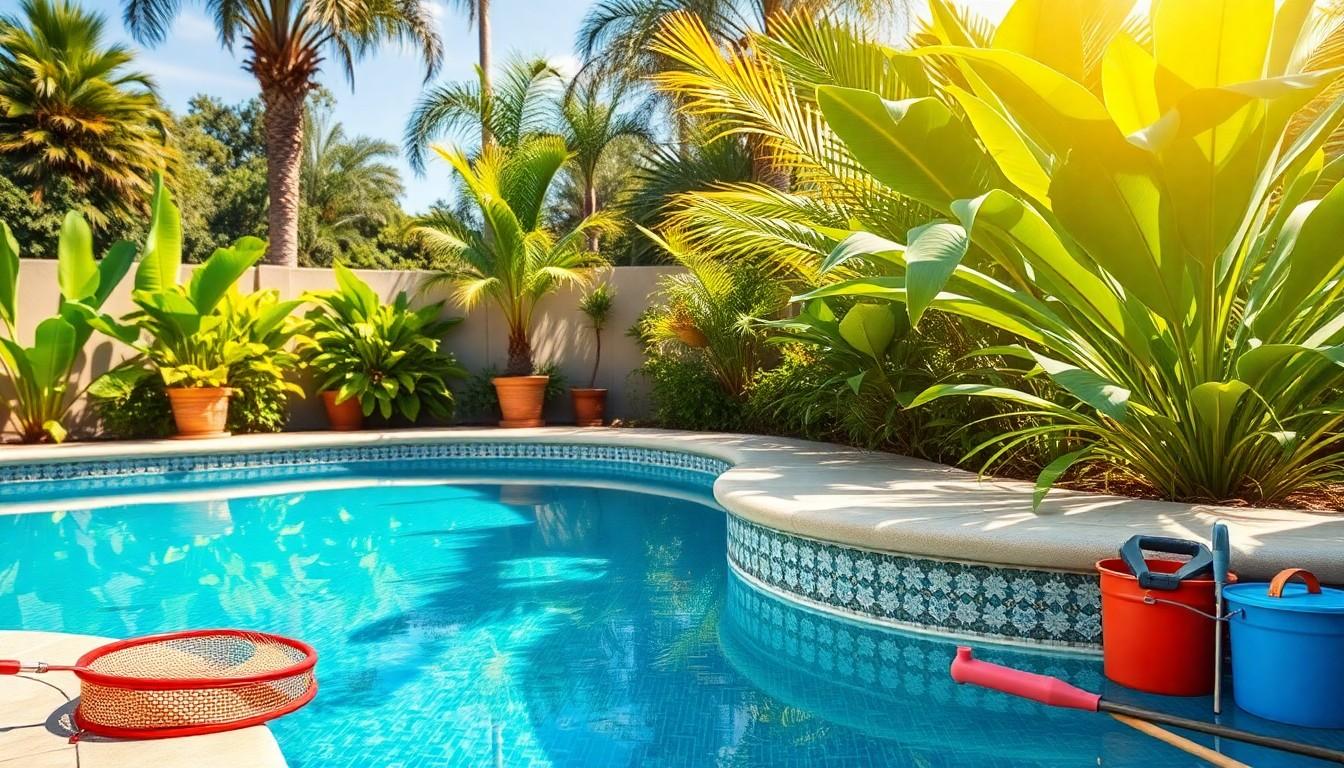
Pool maintenance relies on various factors that influence the effort and resources required to keep swimming areas clean and safe. Two prominent factors include pool size and type, as well as location and climate.
Pool Size and Type
Larger pools demand more maintenance than smaller ones, increasing the time spent on cleaning and chemical balancing. Above-ground pools usually require less attention compared to in-ground alternatives, which often involve intricate systems. Concrete pools necessitate regular upkeep due to porous surfaces that promote algae growth. Vinyl-lined pools, while easier to clean, can still involve significant chemical management. Fiberglass pools provide lower maintenance needs due to their smooth surfaces, which resist debris accumulation.
Location and Climate
Climate significantly impacts pool maintenance frequency. Areas with high temperatures might need more frequent chemical balancing and water evaporation checks. In contrast, regions with cooler weather may lessen maintenance requirements during off-seasons. Proximity to trees or vegetation can lead to more debris accumulation, thus increasing skimming needs. Rain can dilute chemicals but also introduce contaminants, necessitating additional testing and adjustments. Understanding the local environment helps pool owners create effective maintenance schedules.
Estimated Maintenance Costs
Pool ownership involves regular expenses beyond the initial installation. Understanding the typical costs helps owners plan effectively for ongoing maintenance.
Monthly Expenses
Monthly expenses average between $100 and $300, depending on the pool type and size. Both chemical treatments and cleaning supplies factor significantly into these costs. Seasonal changes may influence chemical needs; warmer months often result in higher chlorine use. Regular services like skimming or vacuuming might add extra fees, particularly if hiring professionals. Routine maintenance also often includes water testing kits, which typically range from $15 to $50 each month, depending on the pool’s condition and local pricing.
Annual Costs
Annual costs for pool maintenance typically range from $1,200 to $3,600. Factors such as the pool’s size and type influence these figures, with larger or more complex pools necessitating higher expenses. Major expenses may include equipment repairs or replacements, averaging $300 to $1,000 yearly. Regular inspections contribute to these costs, ensuring equipment works efficiently and preventing issues. Winterizing and opening a pool each year can incur additional charges, often adding $200 to $400. Maintaining pools proactively leads to reduced long-term costs.
Tips for Reducing Pool Maintenance
Maintaining a pool can become simpler with some strategic approaches. Implementing automation and establishing consistent cleaning routines can significantly ease this task.
Automation Options
Automation technology helps streamline pool maintenance tasks. Robotic cleaners reduce manual effort by vacuuming debris efficiently. Additionally, automatic chemical dispensers maintain balanced water chemistry, ensuring safety and comfort. Automated systems can also control water levels and filtration schedules. Investing in devices like timers for filtration systems further minimizes daily oversight. By incorporating automation, pool owners can enjoy their pools without constant worry about upkeep.
Regular Cleaning Routines
Establishing a regular cleaning routine simplifies pool maintenance. Weekly skimming removes floating leaves and debris, enhancing water clarity. Brushing walls and floors prevents algae buildup, keeping surfaces appealing. Scheduling chemical checks every week ensures optimal water balance. Furthermore, filtering systems require consistent cleaning for efficient operation. Cleaning the skimmer and pump baskets regularly helps maintain flow and prevent clogs. By adhering to these routines, pool owners can ensure a well-maintained and inviting swimming environment.
Owning a pool can be a delightful experience but it requires a commitment to maintenance. By understanding the specific needs of their pool type and implementing a consistent care routine, owners can enjoy their oasis with minimal stress. It’s crucial to recognize that proactive upkeep not only enhances the swimming experience but also helps manage costs over time. With the right strategies in place, pool maintenance can transform from a chore into a manageable part of pool ownership, allowing for countless enjoyable days in the sun.

